sábado, 15 de setembro de 2018

Glass Golem

https://upload.wikimedia.org/wikipedia/commons/thumb/e/e4/DnD_Invisible_stalker.png/344px-DnD_Invisible_stalker.png
It is said that this type of construct was created in Kosinbia by glass masters of Urewe, in the shape of obsidian-made kosinbian spearwomen, dancing around a fire while its bodies reflected the flames to create a bright spectacle. It didn't take long for someone to think of a fighting variant, using transparent glass. These glass golems are practically invisible. They may be cast in many shapes, but usually they are humanoids with sharp edges, somewhat fast and brittle.


Glass Golem

Medium construct, neutral

Armor Class 13
Hit Points 43 (5d8 + 20)
Speed 40 ft.

STR DEX CON INT WIS CHA
12 (+1)   16 (+3) 18 (+4) 6 (-2) 10 (+0)   5 (-3)

Damage Immunities lightning, poison and psychic; piercing and slashing from nonmagical attacks not made with adamantine weapons
Condition Immunities charmed, exhaustion, frightened, paralyzed, petrified, poisoned
Senses darkvision 60 ft., passive Perception 10
Languages understands the languages of its creator but can't speak
Challenge 3

  • Immutable Form. The golem is immune to any spell or effect that would alter its form.
  • Invisible. The golem is impossible to see without the aid of magic or a special sense. For the purpose of hiding, the creature is heavily obscured. The creature's location can be detected by any noise it makes or any tracks it leaves. Attack rolls against the creature have disadvantage, and the creature's attack rolls have advantage. 
  • Magic Resistance. The golem has advantage on saving throws against spells and other magical effects. 
  • Magic Weapons. The golem's weapon attacks are magical.

ACTIONS

  1. Multiattack. The golem makes three cutting attacks.
  2. Cutting. Melee Weapon Attack: +3 to hit, reach 5 ft., one target. Hit: 5 (1d8 + 1) slashing damage.

Amaranthine Golem

https://upload.wikimedia.org/wikipedia/commons/7/78/Legionarius.jpg
These huge automatons were used by the old Amaranthine Empire in siege operations and against powerful monsters. Cast in bronze in the shape of a legionnaire, each golem was animated by the fused souls of a whole centuria of war veterans, becoming tactical masters and even competent commanders. The inside of each golem contains icor, a golden and incandescent substance which generates heat. These constructs may still be found guarding the legendary underground amaranthine fortresses (created to withstand dragons) left after the fall of the Amaranthine Empire. The Lega Groura has several of these golems, at least one for each polis, guarding their acropolises. Some of these golems are valuable sources of information about the past.

Amaranthine Golem

Huge construct, unaligned

Armor Class 20
Hit Points 230 (20d12 + 100)
 Speed 30 ft.

STR DEX CONINT WIS CHA
  30 (+10) 9 (-1) 20 (+5)   12 (+1) 11 (+0) 10 (+0)

Damage Immunities fire, poison, psychic; bludgeoning, piercing, and slashing from nonmagical attacks not made with adamantine weapons
Condition Immunities charmed, exhaustion, frightened, paralyzed, petrified, poisoned
Saving Throws Dex +4
Senses darkvision 120 ft., passive Perception 10
Languages amaranth*
Challenge 17

  • Fire Aura. At the start of each of the golem's turns, each creature within 5 feet of it takes 10 (3d6) fire damage, and flammable objects in the aura that aren't being worn or carried ignite. A creature that touches the golem or hits it with a melee attack while within 5 feet of it takes 10 (3d6) fire damage.
  • Immutable Form. The golem is immune to any spell or effect that would alter its form.  
  • Huge Tower Shield. The golem provides three-quarters cover to itself and any allies adjacent to it (included on its CA and dexterity saving throws)
  • Magic Resistance. The golem has advantage on saving throws against spells and other magical effects.
  • Magic Weapons. The golem's weapon attacks are magical. 
  • Siege Monster. The golem deals double damage to objects and structures. 

ACTIONS

  1. Multiattack. The golem makes two flaming spear attacks.
  2. Flaming Spear. Melee Weapon Attack: +15 to hit, reach 15 ft., one target. Hit: 29 (3d12 + 10) piercing damage plus 5 (1d10) fire damage. 
  3. Javelin. Ranged Weapon Attack: +5 to hit, range 200/800 ft., one target. Hit: 26 (4d12) piercing damage.

*Latin of real life.

Golem de Vidro


https://upload.wikimedia.org/wikipedia/commons/thumb/e/e4/DnD_Invisible_stalker.png/344px-DnD_Invisible_stalker.png

As bocas alheias dizem que esse tipo de construto foi criado em Kosinbia por mestres vidraceiros de Urewe, na forma de kosinbianas feitas de obsidiana (um tipo de vidro negro vulcânico) e portando lanças, dançando ao redor de fogueiras enquanto os seus corpos refletiam as chamas para criar um espetáculo luminoso. Não demorou muito para alguém idealizar uma versão para lutar, usando vidro transparente. Um golem de vidro é praticamente invisível. Pode ter muitas formas, mas geralmente são humanoides com bordas cortantes, um tanto quanto quebradiços e rápidos. 


Glass Golem

Medium construct, neutral

Armor Class 13
Hit Points 43 (5d8 + 20)
Speed 40 ft.

STR DEX CON INT WIS CHA
10 (+0)   16 (+3) 18 (+4) 6 (-2) 10 (+0)   5 (-3)

Damage Immunities lightning, poison and psychic; piercing and slashing from nonmagical attacks not made with adamantine weapons
Damage Vulnerabilities thunder
Condition Immunities charmed, exhaustion, frightened, paralyzed, petrified, poisoned
Senses darkvision 60 ft., passive Perception 10
Languages understands the languages of its creator but can't speak
Challenge 3

  • Immutable Form. The golem is immune to any spell or effect that would alter its form.
  • Invisible. The golem is impossible to see without the aid of magic or a special sense. For the purpose of hiding, the creature is heavily obscured. The creature's location can be detected by any noise it makes or any tracks it leaves. Attack rolls against the creature have disadvantage, and the creature's attack rolls have advantage. 
  • Magic Resistance. The golem has advantage on saving throws against spells and other magical effects. 
  • Magic Weapons. The golem's weapon attacks are magical.

ACTIONS

  1. Multiattack. The golem makes three cutting attacks.
  2. Cutting. Melee Weapon Attack: +4 to hit, reach 5 ft., one target. Hit: 5 (1d8 + 1) slashing damage.

    sexta-feira, 14 de setembro de 2018

    Feidarash, the dark elf of Atma

    Not all elves live isolated from the world in in the top of giant trees or mystical forests. Some believe that after spending so much time imprisoned by the fairies one should enjoy his liberty, spiritual and physically. Feidarashes, Ghara's dark elves, inhabit many places, including urban ones, and are more eclectic towards other people and races. Some superstitious individuals still see them as a sign of problems, however. 


    During the pirilampo's mating season, there are no vacant rooms, and it is hard to sleep when the entire city becomes as bright as if the sun and the stars loved each other. There are so many surprises that some are truly unexpected.
    - Lady Vernalagnia Alusif, Senior Madame of the Guilde des Affections Fuyantes, the courtesan's guild of Vieelvier (oldest of imperial mangrove-cities); the most famous feidarash in the whole empire; matchmaker; Melucia's priestess, tailor; courtesan; dance teacher; chakram fighting master.


    Frivolous and Bold


         Physically, the dark elves are almost identical to their nearest cousins, the feidralin. But their skin is dark as ebony, sometimes being a dark grey. Their hair is often white, but many feidarashes use pigments to dye them in pleasing colors (or just to shock other people, mainly feidralin). Their behavior also differs. They don't usually value the traditions followed by feidralin so closely. Their free spirits believe that such atitude just limits the great blessing of freedom they gained in the past. This way of thinking also extends to laws, and, in a few cases, rules, values and social taboos. This "free spirit", together with the curse they are able to induce, makes many think of the dark elves as bringers of problems and bad luck.


    The Fairy Curse


         Just like the Elven Exodus itself, the moment that elves became free of their fey lords, the creation myth of feidarashes has many variations, even among the race itself.

         One of the most common tales is that, during the great rebellion of the elven race, only some of them fought against the fairy tyranny. These ancient elves were the ones which planned their escape and even the development of writing itself, the weapon used by them to be masters of their own fate. While most of them escaped, these first rebels were cursed by the fey. They had their skin marked so that they would always remember their "mistake". Some feidarashes say the color of their skins was due to a dark humour of their fey masters, for it was the same color of the first phrases they marked on parchments. This curse also would bring disgrace to any that touched them, isolating them from potential allies. Through the ages, the dark elves learned to adapt. They accepted the way they were marked and now are even proud of the reminder of what they accomplished. They also learned how to control their touching curse, becoming able to choose when to use it. More than the colors and the fey curse, some feidarashes ascribe their thirst for new experiences and curiosity to the fey, saying that this is their true curse. The subject is a controversial one, but the dark elves don't seem inclined to seeking the truth. A complication of this matter is that assuming mortal forms was like the awakening of a deep dream, hazy and hard to remember precisely. As many of them say, what has passed, has passed. 
     

    Locais de Importância:


    • Viellvier - Perhaps the world's oldest seaport, raised in an estuary where the feidarashes say they disembarked after escaping from Numeria. It is now a barony where the Northern Empire produces its best ships. The countless docks and shipyards are the stilt roots of a giant mangrove tree which drains salt water and separating it into clean water and salt for its inhabitants. Individuals and merchandises from all over the world go through here every day. About half the population are feidarashes. Many are courtesans and courtiers, the profession of a tenth of the three hundred thousand inhabitants. Instead of lamps or torches, the city is kept alight by domesticated giant pirilampos, both adult bugs as well as larvae hanging from the mangrove by silk threads. The baron's power is contested daily by the local guilds and owners of merchant fleets.
    • Ardenellie -  The Sycamore's duchy capital is a grove of giant fig trees intertwined in Feidr's central plains. The elven trees are as high as cathedrals and as large as cities, Many roots coming out from the branches form secondary and yet huge trunks. Some of the hundred thousand citizens are so dedicated to the trees that they hardly step on the ground. Most of the houses are hanging onto the truss of branches, silk ropes and vines. Ardenellie produces the most food on the entire Feidr region. A council of elders and guild masters manages the city. Most of the population is feidalin, but one of five inhabitants are feidarashes.

      Feidarashis Traits


    • The dark elves from Ghara are unlike the dark elves of D&D and form its own unique race.
    • Ability Score Increase. Your charisma score increases by one.
    • Age. Dark elves reach physical and mental maturity at about 20 years old. Like the feidralin, they may live as long as 700 years, maybe more. However, their memories aren't any better than a human's, so very old elves hardly remember most of their lives.
    • Alignment. The feidarashes consider themselves free and don't like the rigidity of law and rules. Because of this, a dark elf has strong tendencies towards the chaotic alignment. They don't have any particular leaning towards good or evil.
    • Size. Dark elves range from under 5 to over 6 feet tall and have slender builds. Your size is Medium.
    • Speed. Your base walking speed is 30 feet.
    • Sidhe Curse. As an action you may curse a target up to 30 feet away that you might see with the power of the fey lords. The target must roll a Charisma check, DC 8 + your proficiency value + your Charisma modifier. If it fails, the target suffers, until the end of its next turn, a penalty on its rolls of attack, damage, ability, skills and saving throws equal to your proficiency value. If the target succeeds, you don't spend your use of the Sidhe Curse (and may try again if you wish). Creatures immune to enchantment effects can't be affected. A creature affected by the Sidhe Curse can't be affected again by the Sidhe Curse of any and all feidarashes during the next 24 hours. After affecting a creature, you must have a long rest before using this power again.
    • Feidarash weapons training. You are proficient with rapiers, short swords and chakrams.

    quinta-feira, 13 de setembro de 2018

    Rote Zone ("Red Zone")

     
         The result of nearly six hundred years of war, a no man's land which kills as much as nine in ten living beings, from ants and grass to men and horses. Centuries of war, thousands of craters and millions of dud munitions deform a soil contaminated by the neftulian miasma, lead fragments, piles of rust which once were cannons, corpse-choked bogs which were once trenches, countless rats and their diseases. No source of water is clean, neither is the land appropriate for building or farming. The zone corresponds to the coastal borders of Technogestalt, going as much as thirty kilometers inland. Only the neftulian undead and the geisthane should be able to survive here.

         However, the red zone is inhabited by the Fängern, groups of scrappers unafilliated to Neftul or Technogestalt. It is unknown if they are humans or some otherwise extinct scarnostian race. Changed by the constant exposition to fel and the toxic miasma, the rags they call clothes hide a hairless, ashen and spotted skin. The leftovers of war are their means of survival, abandoned bunkers are their nests. They are obsessed in collecting all kinds of of potentially useful objecta: broken cogs. bones, musical instruments, rusty barbed wire, relics of old places and times, swords, scroll fragments, all stored and hidden. Technogeist calculates that this behavior is as much a survival trait as a reaction to the destruction and death, reasons possibly distorted by sick bodies and minds. It also suspects that some attacks in the outer borders of technogestalt aren't done by Neftul, but by groups of fängern which survive in the vast western wastelands; Geisthane squadrons are sent to eliminate every found nest, with orders to destroy any possible magical objects the fängern may have found.

    Ragnarok Wall

    https://upload.wikimedia.org/wikipedia/commons/thumb/8/80/Pianta_del_forte_di_Boara_Polesine.tif/lossy-page1-640px-Pianta_del_forte_di_Boara_Polesine.tif.jpg

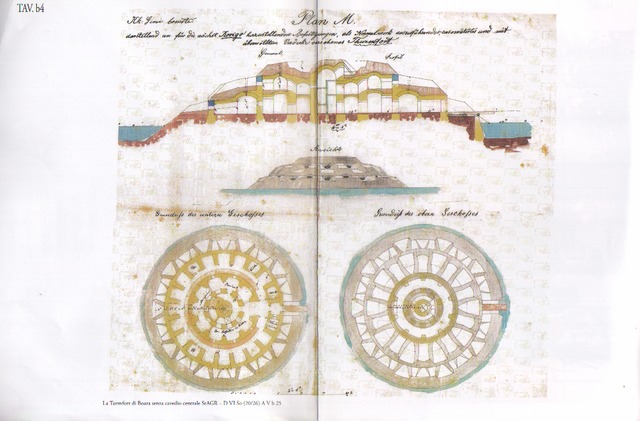
    It isn't actually a wall, but several huge lines of overlaid defensive positions, developed to channel the enemy into certain directions. These positions are called bollwerks, hundreds of redoubts formed by bunkers, trenches, railways, walls, mined fields and underground shelters.

    510px-British WWII Pillbox FW3-27 section by BrunoKopte

    Even the bunkers are influenced by Panoptischen.


    In some battles, Neftul used so many disposable hordes which the intervals between the defenses were choked with undead, every bollwerk an island of desperate bravery in a tsunami of zombies, skeletons and other creatures. Despite being well supplied with things such as uninfected clothes, spears, filters for miasma masks and ammunition, many defenses fall to the pressure and isolation. This is expected in Technogestalt's strategy, which gives off different supplies to every bollwerk so that they resist more or less, making the enemy occupying an area but relieving another. 


    http://ghara.pbworks.com/f/1465048231/tubesinparis_zpsb178bc7e.jpg

    This might include sealing off the many tunnels linking bollwerks.

    Miasma is a common neftulian tactic. Besides hiding the undead from the artillery, it includes toxic alchemies. Horsemen using mounts imported from the Northern Empire navigate the fog, armed only with their hearing and flare guns.

     
    Likewise, Neftul adapts how it employs its hordes to changing conditions. It is likely that only Arcantos and Technogeist can fully understand the strategical and even tactical details, every scarnostian commander or neftulian necromancer no more than a pawn in this war theatre, following what may be strange orders.  
         
    So, after the hordes are busy with hundreds of points of resistance, dispersed and weakened, the geisthane railcruisers may start their bombardment and disposal. Even so, lack of ammunition, personnel, or the neftualin absolute numerical superiority might prevent an undead offensive from being fully eliminated before the next begins. Such occasions favor the siege mentality entrenched in scarnostian culture, and it's possible that such Technogeists plans it like so, even if it is conservative when it comes to its human resources. It knows that it doesn't have infinite hordes to waste, and using people as cannon fodder is against the principles of Neosargonism. 


    Douglas-Scottish FFT(1901)-p162-Nuckalavee-illustr by BrunoKopte

    If even the leaders are pawns, what can one say about the ones lead?

      Tecno gestalt's Ministerium Statistiken Synergie (Ministery of Statistical Synergy) classified some battles between Technogestalt and Neftul as lasting years, episodes of a war which has been going on for nearly six hundred years.

    Sweta Mountains

    https://upload.wikimedia.org/wikipedia/commons/thumb/6/6c/Langtang_range_%2864%29.JPG/640px-Langtang_range_%2864%29.JPG
    This mountain range isn't controlled by the sultans thanks to the power and influence of Ignatius, a red dragon which was said by some to have been an ally of Dajjal during the Heroic Cycle. He lives in the golden city called Hiranyapura, guarded by the Kalakeya ogres. There are some people which benefit from the fact that Ignatius keeps the sultans away:

    https://upload.wikimedia.org/wikipedia/commons/thumb/8/8e/Gimli_son_of_Gloin_by_Perrie_Nicholas_Smith.jpg/320px-Gimli_son_of_Gloin_by_Perrie_Nicholas_Smith.jpgThe Yakshas are dwarfs with curly hair living inside the Kalash Mountain, under the eternal rule of king Kubera, a dwarf which transferred his soul into a golem made of steel, gold and a huge diamond mustache. They deliver a tribute of rubies, gold and lapis lazuli to Ignatius yearly, in exchange for peace and help against a possible but unlikely sultan attack. The dwarfs also produce wootz steel, simply the best steel in the world, in furnaces fed by the monsoon winds in Kalash's peak. The kingdom's capital is called Alaka, and it is the only big town on it. The borders of the yaksha kingdom are marked by iron pillars which never rust.
     

    https://upload.wikimedia.org/wikipedia/commons/2/24/DnD_Centaur.png

    The valleys among the mountains are home to the Kinnara tribes, pastoral nomads which keep camel herds. Although some tribes practice banditry, most prospers selling their camels, much appreciated by those which travel along the Ivory Route. Kinnara camels endure the desert's heat and the mountain's cold equally well, can live months without water and acquire it from consuming snow. They also eat almost anything: roots, cactuses, bones and even ropes.


    The great Khandava forest is the domain of the nagas, a race of big intelligent snakes, some of which are capable of turning into men and women with snake-like traits, a powerful venom and great beauty. They also gain new heads as they age. The current naga queen, Nayaka Ulupi, is a huge seven-headed serpent which can turn into seven separate women, distinguishable by the colors of the rainbow, each governing one region of the forest. Because of this and other magical feats (such as flight), she is worshipped as a goddess by many khejali.