Mostrando postagens com marcador D&D5E. Mostrar todas as postagens

sexta-feira, 26 de junho de 2020

Esmagador Palatini Modelo IV


A mais nova máquina de guerra do barão Caleb Culver é o Esmagador Palatini Modelo IV*. Trata-se de uma carruagem blindada e armada com dois canhões frontais e seis falconetes raiados laterais, todos de carregamento pela culatra. Também conta com uma grande lâmina dianteira, capaz de forçar portões de castelos e rasgar trolls ao meio. A blindagem é no mínimo inusitada: um grande casco de pykrete mantido gelado devido a fragmentos de gelo eterno adicionados à mistura de polpa de madeira e água. A invenção usa um motor alquímico desenvolvido pelo barão a partir de um motor a vapor importado de Technogestalt e modificado com uma caldeira de oricalco. Essa engenhoca é movida não apenas pelo calor do combustível, mas também pela magia do mesmo. Isso significa que, embora o motor funcione com carvão, ele será mais potente usando materiais como certas poções, fel, madeira sycamoriana ou até itens mágicos. O Esmagador precisa de um motorista, um engenheiro e nove artilheiros para funcionar de forma adequada. Por enquanto, permanece único, mas Culver já planeja os modelos V, VI e VII, que serão versões melhoradas e com armamentos diferentes.

*O modelo I era um veículo mais primitivo, feito a partir de múltiplas máquinas de cerco e sem motor ou armas de fogo. O modelo II explodiu. O modelo III é usado pelos Ursos de Palatini.


Palatini Crusher

Huge construct, lawful neutral


Armor Class 18 (natural armor)
Hit Points 115 (10d12+50)
Speed 30 ft.


STR DEX CON INT WIS CHA
20 (+5) 10 (+0) 20 (+5) 12 (+1) 12 (+1) 10 (+0)

Damage Resistances Cold
Damage Immunities poison, psychic, necrotic
Condition Immunities blinded, charmed, deafened, exhaustion, frightened, incapacitated, paralyzed, petrified, poisoned, prone, stunned, unconscious
Senses darkvision 120 ft., passive Perception 11
Languages Common
Challenge 14 (11,500 XP)

  • Death Burst. When the crusher is destroyed, it explodes in a cloud of steam. Each creature within 30 feet of the crusher must succeed on a DC 18 Dexterity saving throw, taking 35 (10d6) fire damage on a failed save, or half as much damage on a successful one.
  • Multiple eyes. The crusher has advantage on Wisdom (Perception) checks that rely on sight.
  • Noisy engine. The crusher has disadvantage on Wisdom (Perception) checks that rely on hearing.

ACTIONS

  1. Multiattack. The crusher makes one cannon attack, one giant blade attack and two swivel gun attacks in the same turn.
  2. Cannon. Ranged Weapon Attack: +8 (or the result of proficiency plus dexterity), range 300/1,500 ft. , one target. Hit: 34 (6d10) bludgeoning damage.
  3. Giant Blade. Melee Weapon Attack: +8 to hit, reach 5 ft., one target. Hit: 39 (6d10 + 5) slashing damage.
  4. More Pressure! (Recharge 5-6). Until the end of its next turn, the crusher gains a +2 bonus to its AC, has advantage on Dexterity saving throws, and can use its giant blade attack as a bonus action.
  5. Swivel gun ("falconete" em português). Ranged Weapon Attack: +8 to hit, range 325/3,250 ft., one target. Hit: 17 (3d10) bludgeoning damage.

Calceratops

Image by Clker-Free-Vector-Images from Pixabay

O calceratops é parecido com o triceratops que existe nas terras goblinoides, mas têm um metabolismo mágico que permite que ele viva em regiões frias como a cordilheira de Hamask Barbagia. Esse dinossauro se alimenta de madeira para manter uma espécie de caldeira que fica dentro de uma corcova no dorso no animal. Assim ele se mantém quente mesmo em temperaturas congelantes. Quanto mais frio, mais madeira ele precisa consumir diariamente. Caso sinta muita fome, a espécie chega a atacar as construções de comunidades que vivem na cordilheira, devorando casas inteiras. Em contrapartida, algumas aldeias locais já conseguiram domar um ou dois calceratops, alimentando-os com lenha para que aqueçam salões comunais subterrâneos e até saunas, compartilhados por raças que não aguentam o inverno como os anões shardokan.

Embora seja um herbívoro, o calceratops é agressivo. Intrusos em seu território vão ser perseguidos até saírem dele. Quando luta, este dinossauro usa chifres e cargas na direção do inimigo, mas também pode exalar um sopro de vapor escaldante.

Calceratops

Huge monstrosity, unaligned


Armor Class 13 (natural armor)
Hit Points 127 (11d12+55)
Speed 50 ft.


STR DEX CON INT WIS CHA
20 (+5) 9 (-1) 20 (+5) 2 (-4) 11 (+0) 7 (-2)

Damage resistance fire

Senses passive Perception 10

Languages

Challenge 6 (2,300 XP)


  • Trampling Charge. If the calceratops moves at least 20 feet straight toward a creature and then hits it with a gore attack on the same turn, that target must succeed on a DC 13 Strength saving throw or be knocked prone. If the target is prone, the calceratops can make one stomp attack against it as a bonus action.

ACTIONS

  1. Gore. Melee Weapon Attack: +8 to hit, reach 5 ft., one target. Hit: 24 (4d8 + 6) piercing damage.
  2. Steam Breath (Recharge 5-6). The calceratops exhales scalding steam in a 30-foot cone. Each creature in that area must make a DC 15 Constitution saving throw, taking 28 (8d6) fire damage on a failed save, or half as much damage on a successful one. Being underwater doesn't grant resistance against this damage.
  3. Stomp. Melee Weapon Attack: +8 to hit, reach 5 ft., one prone creature. Hit: 22 (3d10 + 6) bludgeoning damage.

domingo, 14 de junho de 2020

The Colour Out of Space for D&D5E

Author: Ludvik Skopalik (ludvikskp.blogspot.fr)


The Colour Out of Space is an immaterial entity, made of an ethereal light of incomprehensible colour. To survive and reproduce, it drains vital energy from its surroundings, slowly withering an area where everything: minerals, plants and animals become grey and brittle. The plants and animals also develop unsettling mutations in body and mind. Affected people become tired all the time.

When it's satistified, the Colour creates a meteor to transport its "eggs", which are multicolored globules. Upon arriving at another place or even planet, they dissolve and infect a new region. The Colour isn't vulnerable to sunlight, but it seems to compete with it after a fashion, preferring the darkness of the night, underground environments and its own bizarre brightness.

In the Atma setting, the origin of the Colour is a mystery. The very god of knowledge, Devinci, claims he doesn't know from where the Colour came from, or if it has a purpose besides reproduction. The simple reason of that the mi-go are also of an alien nature made some scholars to suppose a link between them and the Colour, but it is nothing besides speculation.


Colour Out of Space

Large aberration, neutral evil


Armor Class 17 (natural armour)
Hit Points 114 (12d10+48)
Speed 0 ft., fly 30 ft. (hover)


STR DEX CON INT WIS CHA
6 (-2) 10 (+0) 18 (+4) 14 (+2) 16 (+3) 16 (+3)

Damage Resistances bludgeoning, piercing and slashing from nonmagical attacks
Damage Immunities necrotic, poison, psychic
Condition Immunities blinded, charmed, deafened, frightened, paralyzed, petrified, poisoned, prone
Senses darkvision 120 ft., passive Perception 13
Challenge 10 (5,900 XP)


  • Alien Aura. The colour out of space emits an alien bright radiation. At the start of its turn, every creature within 10 feet of the colour takes 5 (1d8) necrotic damage plus 5 (1d8) radiant damage plus 5 (1d8) psychic damage. 
  • Dust to Dust. Any creature killed by the colour will become a fine grey dust.
  • Incorporeal Movement. The colour can move through other creatures and objects as if they were difficult terrain. It takes 5 (1d10) force damage if it ends its turn inside an object.
  • Variable Illumination. The colour sheds bright light in a 10- to 30-foot radius and dim light for an additional number of feet equal to the chosen radius. The colour can alter the radius as a bonus action.

ACTIONS

  1. Alien Beam. Ranged Spell Attack: +7 to hit, reach 90 ft., one target. Hit: 9 (2d8) necrotic damage plus 9 (2d8) radiant damage plus 9 (2d8) psychic damage.

LEGENDARY ACTIONS

The colour can take 3 legendary actions, choosing from the options below. Only one legendary action option can be used at a time and only at the end of another creature's turn. The colour regains spent legendary actions at the start of its turn.

  1. Move. The colour moves up to its speed without provoking opportunity attacks.
  2. Alien Beam (Costs 2 Actions). The colour makes one alien beam attack.
  3. Life Leech (Costs 3 Actions). The colour drains the life force from all creatures in a 60-foot radius around it. All creatures in the area must succeed on a DC 16 Constitution saving throw or take 18 (4d8) necrotic damage. The target's hit point maximum is reduced by an amount equal to the necrotic damage taken, and the colour regains hit points equal to that amount. The reduction lasts until the target finishes a long rest. The target dies if this effect reduces its hit point maximum to 0.

A Colour's Lair

A colour prefers dark areas, like abandoned wells and deep caves.

Lair Actions

On initiative count 20 (losing initiative ties), the colour takes a lair action to cause one of the following magical effects. It can't use the same action two turns in a row:

  • It emits a blinding multicolored light. All creatures within 30 feet of the colour must succeed a DC 16 Dexterity saving throw or be blinded for 1 minute. A creature can repeat the saving throw at the end of each of its turns, ending the effect on itself on a success.
  • The colour saps the body and mind of everything nearby. All creatures within 30 feet of the colour must succeed on a DC 16 Constitution saving throw or they will get one level of exhaustion.

Regional Effects

The region around the colour's lair becomes blighted by its presence, creating the following effects:

  • Animals and plants become tasteless and inedible, not providing any nutrients.
  • Local water sources are tainted and have a foul taste.
  • Plants become slightly luminous in the dark and sometimes, they move even without winds.
  • Every month, all creatures and plants within 1 kilometer of the lair acquire one exhaustion level.
  • Creatures within 1 kilometer of the lair might go mad, some also becoming agressive. Consider using the Madness optional rule.
If the colour is destroyed, these effects end after 3d6 weeks.

English Material


Welcome to the repository of articles and RPG material written in English. We hope you find what you're looking for.


sábado, 13 de junho de 2020

A Cor do Espaço

Autor: Ludvik Skopalik (ludvikskp.blogspot.fr)


A Cor do Espaço é uma entidade imaterial, feita de uma luz etérea de cor incompreensível. Para sobreviver e se reproduzir, ela drena energia vital dos arredores, lentamente criando uma área onde tudo, minerais, plantas, animais, se tornam cinzas e quebradiços. Além disso, as plantas e animais sofrem deformações inquietantes no corpo e na mente. Pessoas afetadas ficam cansadas o tempo todo.

Quando está satisfeita, a Cor cria um meteoro para transportar os seus “ovos”, que são glóbulos multicoloridos. Chegando em outro lugar do mundo ou até outro planeta, os mesmas se dissolvem e infectam uma nova região. A Cor não é vulnerável à luz do sol, mas parece competir com ela de certa forma, preferindo a noite, ambientes subterrâneos e o seu próprio brilho bizarro.

No cenário Atma, a origem da Cor é um mistério. O próprio deus do conhecimento, Devinci, diz não saber de onde a Cor veio, ou se ela tem um objetivo além da reprodução. A simples razão de que os mi-go também são criaturas de natureza alienígena já fez alguns estudiosos teorizarem que existe uma ligação entre os mi-go e a Cor, mas tratam-se apenas de especulações.


Colour Out of Space

Large aberration, neutral evil


Armor Class 17 (natural armour)
Hit Points 114 (12d10+48)
Speed 0 ft., fly 30 ft. (hover)


STR DEX CON INT WIS CHA
6 (-2) 10 (+0) 18 (+4) 14 (+2) 16 (+3) 16 (+3)

Damage Resistances bludgeoning, piercing and slashing from nonmagical attacks
Damage Immunities necrotic, poison, psychic
Condition Immunities blinded, charmed, deafened, frightened, paralyzed, petrified, poisoned, prone
Senses darkvision 120 ft., passive Perception 13
Challenge 10 (5,900 XP)


  • Alien Aura. The colour out of space emits an alien bright radiation. At the start of its turn, every creature within 10 feet of the colour takes 5 (1d8) necrotic damage plus 5 (1d8) radiant damage plus 5 (1d8) psychic damage. 
  • Dust to Dust. Any creature killed by the colour will become a fine grey dust.
  • Incorporeal Movement. The colour can move through other creatures and objects as if they were difficult terrain. It takes 5 (1d10) force damage if it ends its turn inside an object.
  • Variable Illumination. The colour sheds bright light in a 10- to 30-foot radius and dim light for an additional number of feet equal to the chosen radius. The colour can alter the radius as a bonus action.

ACTIONS

  1. Alien Beam. Ranged Spell Attack: +7 to hit, reach 90 ft., one target. Hit: 9 (2d8) necrotic damage plus 9 (2d8) radiant damage plus 9 (2d8) psychic damage.

LEGENDARY ACTIONS

The colour can take 3 legendary actions, choosing from the options below. Only one legendary action option can be used at a time and only at the end of another creature's turn. The colour regains spent legendary actions at the start of its turn.

  1. Move. The colour moves up to its speed without provoking opportunity attacks.
  2. Alien Beam (Costs 2 Actions). The colour makes one alien beam attack.
  3. Life Leech (Costs 3 Actions). The colour drains the life force from all creatures in a 60-foot radius around it. All creatures in the area must succeed on a DC 16 Constitution saving throw or take 18 (4d8) necrotic damage. The target's hit point maximum is reduced by an amount equal to the necrotic damage taken, and the colour regains hit points equal to that amount. The reduction lasts until the target finishes a long rest. The target dies if this effect reduces its hit point maximum to 0.

A Colour's Lair

A colour prefers dark areas, like abandoned wells and deep caves.

Lair Actions

On initiative count 20 (losing initiative ties), the colour takes a lair action to cause one of the following magical effects. It can't use the same action two turns in a row:

  • It emits a blinding multicolored light. All creatures within 30 feet of the colour must succeed a DC 16 Dexterity saving throw or be blinded for 1 minute. A creature can repeat the saving throw at the end of each of its turns, ending the effect on itself on a success.
  • The colour saps the body and mind of everything nearby. All creatures within 30 feet of the colour must succeed on a DC 16 Constitution saving throw or they will get one level of exhaustion.

Regional Effects

The region around the colour's lair becomes blighted by its presence, creating the following effects:

  • Animals and plants become tasteless and inedible, not providing any nutrients.
  • Local water sources are tainted and have a foul taste.
  • Plants become slightly luminous in the dark and sometimes, they move even without winds.
  • Every month, all creatures and plants within 1 kilometer of the lair acquire one exhaustion level.
  • Creatures within 1 kilometer of the lair might go mad, some also becoming agressive. Consider using the Madness optional rule.
If the colour is destroyed, these effects end after 3d6 weeks.

domingo, 7 de junho de 2020

Shanobog, the Devouring Prison

Drawing commissioned from Deivid Nogueira

Created by Arcantos, the Primordial Lich. The fusion of sunken ships and the carcasses of sea creatures into a maritime monstrosity. The result is a titanic mixture of golem and undead, whale and carrack. The stories of survivors indicate that only one such monster exists, but it changes and grows as it absorbs more ships and prey.

The testimony of Garos, an imperial sailor, swears that the crews taken by the beast aren't absorbed, but swallowed and kept alive to be taken to Neftul. He describes the monster's interior as a dungeon of flesh and wood, where he found jailers keeping hundreds of prisoners, supplies, wealth from destroyed ships and even a pirate crew. The latter helped him find enough dry gunpowder to burst open a hole in Shanobog so they might escape. Garos can now be found at the Camulian Hospital in Noster Amaranthi.

Another testimony, coming from the admiral Federick of Abalm, claims that a abalmian fleet managed to kill the beast once they had the support of leyships. Shanobog's return, months later, was a complete surprise. Abalmian spies infiltrated Neftul and, at the cost of many lives, found out the reason. Arcantos keeps an artefact called the Heart of Shanobog inside Neftul, which works akin to a lich's phylactery: as long as it remains intact, Shanobog shall rebuild itself from sea corpses and sunken ships.

Shanobog

Gargantuan construct, chaotic evil

Armor Class 19 (natural armor)
Hit Points 388 (25d20 + 125)
Speed swim 60 ft.

STR DEX CON INT WIS CHA
30 (+10) 10 (+0) 20 (+5) 12 (+1) 16 (+3) 10 (+0)

Damage Immunities necrotic; poison; bludgeoning, piercing, and slashing from nonmagical attacks not made with adamantine weapons
Condition Immunities charmed, exhaustion, frightened, paralyzed, petrified, poisoned
Senses blindsight 180 ft., darkvision 120 ft., passive Perception 13
Languages understands Common and Deep Speech but can't speak, telepathy 120 ft.
Challenge 23

  • Echolocation. The shanobog can't use its blindsight while deafened  
  • Immutable Form. The shanobog is immune to any spell or effect that would alter its form. 
  • Keen Hearing. The shanobog has advantage on Wisdom (Perception) checks that rely on hearing.
  • Magic Resistance. The shanobog has advantage on saving throws against spells and other magical effects.  
  • Magic Weapons. The shanobog's weapon attacks are magical. 
  • Siege Monster. The shanobog deals double damage to objects and structures. 

ACTIONS


Multiattack. The shanobog makes six tentacle attacks.
  1. Bite. Melee Weapon Attack: +17 to hit, reach 5 ft., one target. Hit: 23 (3d8 + 10) piercing damage.
  2. Tentacle. Melee Weapon Attack: +17 to hit, reach 40 ft., one target. Hit: Hit: 23 (4d6 + 10) bludgeoning damage, and the target is grappled (escape DC 18). Until this grapple ends, the target is restrained (DC 18). The shanobog has sixteen tentacles, each of which can grapple one target.
  3. Rot Breath (Recharge 5-6). The shanobog exhales necromantic energy in a 120-foot cone. Each creature in that area must make a DC 20 Constitution saving throw, taking 56 (16d6) necrotic damage on a failed save, or half as much damage on a successful one.  
  4. Swallow. Melee Weapon Attack: +17 to hit, reach 5 ft., one target. Hit: the target is swallowed, and the grapple ends. While swallowed, the creature is blinded and restrained, it has total cover against attacks and other effects outside the shanobog. It doesn't take acid damage, for the shanobog's purpose is to transport its prisoners alive to Neftul. If the shanobog takes 60 damage or more on a single turn from a creature inside it, the shanobog must succeed on a DC 25 Constitution saving throw at the end of that turn or regurgitate all swallowed creatures, which fall prone in a space within 10 feet of the shanobog. If the shanobog dies, a swallowed creature is no longer restrained by it and can escape from the corpse using 60 feet of movement, exiting prone.

LEGENDARY ACTIONS


The Shanobog can take 3 legendary actions, choosing from the options below. Only one legendary action option can be used at a time and only at the end of another creature's turn. The Shanobog regains spent legendary actions at the start of its turn.
  • Absorb (Costs 3 Actions). All creatures grappled by the shanobog start to be absorbed by it, being consumed in the process while it regenerates. The target suffers 14 (4d6) necrotic damage. The target's hit point maximum is reduced by an amount equal to the necrotic damage taken, and the shanobog regains hit points equal to that amount. The reduction lasts until the target finishes a long rest. The target dies if this effect reduces its hit point maximum to 0.
  • Chomp (Costs 2 Actions). The shanobog makes one bite attack or uses its Swallow.
  • Move. The shanobog moves up to half its speed.

sábado, 17 de novembro de 2018

Umoks

Creatures slither across the humid jungle while powerful jaws drip. A bamboo grove blocks the way: the creatures bite and tear apart trunks as if they were just sticks. Soon those mouths would split open the enemy's armor in the same way.
Mauleosteus, nicknamed "Maul". Exiled from his tribe, he chose the Northern Empire as his new one. His efforts in exploring the umok archipelago for the northern civilization granted him an imperial citizenship, the title of "dom" and his very own caravel. Maul is unique among his race for having some reptilian traits such as the type of scales. After speaking with a shaman, he says that he reincarnated with traits of his former life. Despite his appearance, he is quite friendly towards new people.

The umoks waited in the water. Being hooked by them was the end: no one returned from the dark and increasingly red waters. And despite the screams of pain, the rattling of swords and the rhythm of the waves, there wasn't a stronger sound than the bellowing of the gongs the umok war bards fastened to their arms like shields. That terrible rhythm was only broken when the gongs were actually used for defense, against brave northerners which learned the strength of the arms and clubs which hit the gongs. The songs in rough voices coming from bloody jaws foresaw the defeat that the empire would suffer that day.
-Lucan de Camina, author of Norteia, epic about the first northern expedition to the umok's home archipelago and the Battle of the Sharks.


Legends and Oral Traditions

https://upload.wikimedia.org/wikipedia/commons/thumb/a/ae/Nagas_Royal_Carriage.JPG/320px-Nagas_Royal_Carriage.JPGThe umoks believe that their chaotic character and physical traits come from their origin. Each tribe seems to have a different version, but the myth goes more or less like this: a group of dragons similar to sea serpents, the kupuas, were jealous of their draconic cousins of Drakhazin, for they had the obedience, fear, loyalty and even love of races like the zitai. Mo-o Inanea announced he knew Kane, a secret island where the clay was so full of life, it could be used to create their own race. The kupuas hurried in using it to sculpt the umoks. They started with a version based on a certain animal, but soon grew bored and tried other versions using new creatures:fishes, reptiles, amphibians and even mammals were copied. This cycle repeated many times until Kiha-wahine suggested that they picked up a trait of each version: After discussions and fights, they decided for the variations that the race has up to this day: a member of the race can be born with one of many types of heads, like eels, sharks, placodermi, piranhas and every type of carnivorous fish. The umoks believe that this chaotic process made them naturally adverse to boredom when compared with the other races. This trait also prevented them from completely serving the kupuas, although umoks regard the latter as sacred ancestors to which they offer tributes and sacrifices. These entities are said to live to this day in secret islands, tribal sanctuaries that only the shamans know.


Anarchic Heritage


The umoks are beings of rough constitution; bestial and hybrid appearance; savage, dynamic, chaotic and, often, inconsequential behavior. Natural amphibians, umoks make good pirates and quickly adapt to the intricate reefs and sea currents where their tribes raise their homes. They are creatures that feel compelled to let go of routines and hardly remain in a single place for long. Most umoks live in nomadic tribes dedicated to hunting, fishing, gathering and plundering, or offer their skills to people which might pay more or offer good life conditions. One in each ten umoks is an adventurer, explorer, merchant or hunter of sea beasts. While adventurers are marginalized in the imperial society, among umoks they are the center of attention. The objective is to gather fame, fortune and followers to create your own tribe and be immortalized in the latter's legends. A common way to do so is accumulate treasures in the tribal refuges where the ancestors' remains are laid down and/or lives one of the dragons which created the race. One never knows when a kupua might return and be impressed with the adventurer's dedication. The rewards vary: secret information; powerful blessings; the location of sunk treasure; or even the privilege of escorting the dragon on his next swim.

https://upload.wikimedia.org/wikipedia/commons/thumb/b/bb/Sail_plan_tepukei.svg/231px-Sail_plan_tepukei.svg.png Great navigators, umoks value the building of vessels. The master artisans have each their own techniques, but they also incorporate foreign elements or renovate salvaged ships. The exclusively umok traits of a ship are: using bamboos of the umok archipelago; and mouth-like sails. Speed and agility are deemed more important than resistance or the volume of carriable cargo, resulting in many thin-hulled catamarans.


Places

  • Hundreds of umok tribes live in Umokaong, an archipelago so vast and labyrinthine that no one has managed to completely map them. At some places the ocean seems more like many salty rivers divided by reefs, sand banks and islets. The Northern Empire currently dominates Ibalong, a triangle-shaped great island, with a volcano in each corner: Hantik, Kolasi and Isarong. The geography is diverse: plains suitable for water buffaloes with huge curved horns, plantations of the valuable sugar cane, umok coastal villages, floating markets and hundreds of canoes; entire lakes dedicated to raise armored catfishes which eat wood and cane berry, named "cascudos"; mangroves where everything tastes like salt; northerner communities with colonists of many races; bays which can house a whole fleet; two mountain chains with icy peaks and active volcanoes; jungles with not even the umoks fully explored.  
  • Tavira Shore - This city is the greatest concentration of umoks in the whole empire; many of which were born here. The population is spread out along a rocky peninsula shaped like a horseshoe. Many sea currents meet nearby and islets appear at the low tides. Dozens of ships run aground along the years were turned upside down and raised over stilts to serve as houses. Fishing and aquaculture sustain over twenty thousand inhabitants. The community exists due to four treasures that only umoks can fully explore: pearl farms among the rocks, using secret techniques to produce pearls in many sizes, shapes and colors, including variations specific to sacrifice to Nyxcilla; whaling expeditions bring much meat, oil, ketin and bones to the city, at least the ones which return; seaweed orchards have many alchemical uses; the amphibian race also put many nets in certain places to catch drifting items, be them wood, wounded whales, empty boats, leather shoes, lobster or chests fallen off ships. The wealth accumulated by the local leader and merchant, Perolos de Ergas, was enough for him to buy the title of viscount and transform a galleon into a floating fortress. He also has the attention of rich and politically relevant clients. This exotic noble raised an amphibian militia which uses halberds and brass cuirasses decorated with black and red pearls. They have a lot of experience in fighting pirates, smugglers and giant crabs amidst the semi submersed caves, mangroves and a graveyard with anchor-shaped tombstones which contains as much ships as peoples.

Umok Traits


  • Speed. Your base walking speed is 25 feet and your base swimming speed is 30 feet.
  • Amphibious. Umoks can breathe underwater as well as out of it.
  • Weapon Proficiency. You are proficient with acangapemas, nets and spears.
  • Skill Proficiency. You are proficient in survival.
  • Chaos Jaws. All umoks have powerful jaws which he can use to attack as a natural weapon which causes 1d8 points of piercing damage and uses strength for attack and damage.
  • Each umok's mouth also gives him unique powers. Choose a characteristic among the ones below. Optionally, if the Master allows, you can choose one of the options at random. If you do so, you add to the result under parenthesis to your character's traits.
    • 1. Big Teeth - Your bite attack deals 1d10 points of piercing damage (Sharp teeth - you can cause critical hits with your bite attack in a result of 19 or 20 in the d20).
    • 2. Long Tongue - You gain an attack with your tongue. It is a natural weapon which deals 1d6 points of bludgeoning damage up to 20 feet away and has the Finesse propriety (Sticky Tongue - If the target is up to a size category bigger than you it is grappled. If you attack another target, the first one is freed).
    • 3. Toxic Saliva - Choose if your bite attack causes poison or necrotic damage. The final choice remains the same for the rest of your life. (Virulent Saliva - the damage of your bite attack is dealt directly into the target's maximum life and persists until the latter has a long rest).
    • 4. Mystic Voice - You can create an effect of ventriloquism, making so that the sound of your voice comes from somewhere else up to 60 feet away (Supernatural Voice - You can reproduce any sounds you have heard, including voices. A creature that hears you can say if they are imitations succeeding on a Wisdom [Insight] ability check. The DC is equal to 8 + proficiency + your Charisma modifier).
    • Ability Score Increase. Your Constitution score increases by 2 and your Strength score increases by 1.
    • 5. Hungry Throat - You can consume foodstuffs equal to, in terms of quantity, one day's worth of rations, in a single action. Every time you do so, you can immediately use one of your HP dice to heal the same amount of hit points equal to the dice's result + Constitution modifier (Abyssal Throat - If you hit a bite attack against a creature at least one size category smaller than yours, you can swallow the target. The swallowed creature becomes restrained and blind, has full cover against external attacks and other effects, and suffers 3 [1d6] points of acid damage in the beginning of each of your turns. You can only swallow one creature. If you are reduced to 0 hit points, the creature isn't restrained anymore and can escape by using 5 feet of its base speed, leaving prone).
    • 6. Roaring Voice - You can vocalize an extremely loud scream in a 15-feet cone. Creatures in its area must pass a Constitution check. All creatures which fail it must become stunned until the beginning of your next turn. You must have a long rest before using this skill again (Thundering Voice - creatures suffer 2d6 points of thunder damage, or half if they are successful at their Con check. This damage increases to 3d6 at the 6º level, 4d6 at the 11º level and 5d6 at the 16 level).

quinta-feira, 4 de outubro de 2018

List of Free 5E Material


http://icmstudy.ir/wp-content/uploads/2014/03/Download-Free.jpg

Here's a list of free or pay-what-you-want materials for 5E available in the internet: naval combat, jousting, magitech guns,  magical tattoos, stronghold building and much more.


It includes several tables and a list of examples.


Your players want to invest into a forge? Buy a bussiness? The DMG's rules aren't good enough? Use this. It has details such as investiments, types of bussinesses, possible random events and more. The material should solve many issues for groups dedicated to this kind of downtime activity.


For creating airships and other flying vehicles. As the author says, it's a way for the players to expend their surplus gold. It's also good for a campaign based on Spelljammer or Final Fantasy. It includes several hull sizes and components. However, it is flawed. It has only a single example, a small craft. It is unclear how many PVs bigger airships should have. It also fails at indicating just how much such airships should cost. Two possible ways to deal with this are: use the rules dealing with objects in the DMG, page 246, which basically treats them in more abstract ways, controled by the GM; or one could use the ships in Expanded Sailing, seen below, as a basis, perhaps multiplying the cost by five or ten. 


A list of weapons and armour representing a period corresponding to the Bronze or Iron age.


This has 80 magical items, five new materials, two races, besides weapons and armour for modern and post-apocalyptic campaigns.

 
A full 1-20 class, focused on integrating technomagical implants and prosthetics in the character's body, becoming a sort of half-golem or cyborg. The implant variety (34) ensures a good amount of customization. It is a hybrid class, having physical abilities as well as being able to cast spells.


A great compendium with races, subclasses, classes, backgrounds, feats, magical traps, spells, variant rules and more. A treat for players as well as GMs.


Do you like necromancy but is unsatisfied with the official material? Want new rules, a full class, new undead, variants, items, diseases and more? If so, check out these three materials.


A huge list of fantasy plants, a total of 179 pages. Each plant has its use, be it for the GM or the player.


Five pages detailing three types of guns which can fire acid, ice and other magical projectiles, according to the gemstone attached to the gun. Includes upgrades. Quite suitable for Eberron.


A big list of varied warriors and soldiers that armies might have, from the human peasant to the draconic champion. The idea is to show how a group or army of well trained and equipped NPCs might seriously threaten the players. Of course, said NPCs might also be hired by the players themselves to garrison their headquarters or to form an allied army.


For battles between great armies, adapting the rules into a kind of wargame where the players still have a decisive role. I personally thought the rules have a good abalance of complexity, customization and realism, but I guess it will depend a lot on one's tastes.


Simply a homebrew to acquire and use magical tattoos. It lacks playtesting and reviews, so be careful. That said, magical countermeasures should be effective against which are basically spells.


Do you want naval combat? Cannons? Several ships and their prices? Upgrades? It's all here.


Two suplements for detailing and making more interesting the travel along faraway and wild lands. Includes basic and advanced rules, as well as rules for several types of environments, climates and environmental dangers. Quite relevant for rangers characters. The "Fulvano's" is interesting for those which wish to control the consumption and foraging of food and water of the group.


Eight guns, detailed rules, cost etc, everything the DMG lacks.


The players want to create a base of operations? Here it is. Whatever it is a guild at a city or an outpost in the borders, this material has rules to create, maintain, occupy and improve several types of structures. Quite detailed but still doesn't adds too many rules. 


A detailed guide about feudalism and how to use it on your game. It's great for those which wish to make campaigns with political intrigue and in which the players are nobles.


A total of eight lovecraftian monsters. Not only to fight, some of them might be bartered with...


These three bring magitech items, monsters and archetypes, very suitable for an Eberron campaign.


Everything you need to do a jousting tournament, be it like a mini-adventure or as part of a campaign. 


These suplements bring planes from MtG, showing how to adapt them for 5E. They also include new races and monsters.


This material brings a gigantic city-state called Mirrorrim, built between the desert and the sea, over a megadungeon which people are forbidden from entering. Includes a map, new races and a few other details. It's interesting, making one wanting for more of what seems to be a future setting.


A total of 10 exotic and creative races to bring more variety and spice for your world.

Everything you need to make a Wild West campaign using 5E's rules" Guns, rules, character creation tips, GM advice etc.


Here we have companies of soldiers with stats made as if they were swarms, allowing for skirmishes and small battles without needing new rules.


It will save some time for the GM which wants to put a merchant in the players' path. It goes from the seed seller up to the fey with bizarre deals, all with extensive and detailed tables.


The first in a series of campaign guides, bestiaries, adventures and more dedicated to detailing and expanding Maztica, a neglected region of the Forgotten Realms, based on mesoamerican culture and mythology, like aztecs and incas. The link above has the links for the other supplements, all available for free. The total material is very rich, good enough to be a setting all on its own.


Here we have new rules and descriptions for the many items found in the PH, as well as some new ones, like the smoke bomb.


I have seen many people unsatisfied with the poisons of the official material. This supplement solves the problem. Detailed rules for many different poisons, be they harvested from plants or complex alchemies.


Bonus: this very blog has free content, such as unique races, monsters, a small list of cannons and rockets and an equipment guide for our setting, Atma.

quinta-feira, 20 de setembro de 2018

Shardokan, dwarf ethnicity

Some dwarfs descend from an old foreign lineage mixed with mountain tribes, exchanging the underground regions for the high and cold mountains. An ethnicity only three hundred years old, the shardokan are dwarfs yearning to overcome difficulties and always willing to face a good challenge.


The falling snow warms my heart, and glorifies the desolation in these rugged mountains, Sharp cold and mindless beasts. It galls me to hear that dwarfs can’t enjoy beauty. Everybody else runs after the elves, forgetting about all the other ways the world can be beautiful. The white brightness of snow, drops of hot fat from roasted ribs, the hidden tenderness in a dwarfwoman’s hips, all unbeatable beauties.

-Nartazov Yaroslav “Kochul” Streltzy, the great kurskian pioneer which delved into the Hamask Barbagia Range. First of the shardokan, meaning “folk of the keen shards”, leader of the Nartazov clan. Missing.


Brave and Passionate

Shardokan are seen by the thorakitai dwarfs as rustic and even primitives. The shardokan themselves are proud of what they see as a greater "inclination to independence" that their cousins don't have. This is also reflected in the clan's loyalty. While the thorakitai are very communal, shardokan might have individual iniciatives in which sucess has more worth than honour, specially when it comes to protecting family, friends and one's home. At war, shardokan are more aggressive, wielding bardiches instead of spears, defending themselves with grenades instead of shields. Outside combat, they're more reserved regarding strangers. Dry and taciturn in public, Hearty and laughing in private. The shardokan themselves say: "as the heart only beats inside one's chest, the noises of friendship and love beat inside one's home."

Faraway and Icy Origin

Shardokans know how to work with materials uncommon among the most renowned crafters of Ghara: ice and pykrete. As they live in high, cold lands where the ice doesn't melts, they use it for building, creating semi underground halls, cities inside glaciers and even pykrete towers that can resist cannon balls. The shardokan themselves say this born talent comes from their old ancestor lineage: all shardokan descend from the union of old mountain dwarf barbarians and the nomad kurskian clan lead by Nartazov Yaroslav.

Practicality Allied to Difficulties

Above all, the shardokan value the challenges brought by the day-to-day in their habitat. For these dwarfs, difficulties are blessings brought by the gods, specially Corallin, as an opportunity to evolve their own competences, a way of thinking which is correct, up to a point. Shardokan believe that the most apt will be the ones that will carry on one's legacy. Therefore, despite their appreciation in going through difficulties as a way to be tested, it doesn't means that they will purposefully try to solve troubles in the hardest way. A shardokan will not hesitate to use several ways to pass over an obstacle, a healthy mix of stubbornness and resolve. The best way to "kill" a shardokan, as they say themselves, is to give them a comfortable life, calm and far from troubles and precious obstacles that could be used as a way to improve all the aspects of one's life. Due to these traits, these dwarfs like something brought by Yaroslav in the form of an arquebus: gunpowder. More than their cousins, the shardokan like the smell of the "noisy solution" that they say the substance has, and firearm users are common in their clan's garrisons.
 
Unique Beliefs
 
Shardokan believe in a second soul that exists apart from the "primary soul" that other cultures believe in, the "name-soul". This is the basis for the importance of the clan: they're all those which share the same surname, and, therefore, the same soul that said surname defines. The name-soul never reincarnates, but stays in the world as long as at least one person is thus named. The name-soul has a power of its own, making that its hosts (and their primary souls) acquire traits of it. That would be the reason that the members of the Kalinin clan insist on haggling under any and all circumstances, or why all the Garka are allergic to pine trees. The "half-dwarfs" in the shardokan epic, The Three Journeys of the Clan, were said to be members of other races that, upon becoming part of the Vainala clan, gained the latter's traits and thus, survived the cold as the non-dwarfs died. Humans in body, but half-dwarfs in soul. And it seems to be a mutual process, for the Vainala are slightly taller than the dwarfs of other clans.

Important Places
  • The Sclaveni Cryopolis is the greatest city in the mountain range, as well as the largest concentration of shardokan in the empire. It is in the Spotted Mountains, thus named due to the contrast between the snow and the plantations of dark cactuses and black lichens. The alpine climate along the year makes ice and pykrete building materials as common as stone, while wood is a luxury for few. The locals think of 0 ºC as mild, and the record of 20 ºC thirty years ago still feeds conversations. The most noteworthy thing in the landscape is a huge glacier, almost broken in two, on the slope of the mountain which shadows the city. Here the locals mine granite, sulfur, coal, ice and the unique material found here, eternal ice, which never melts. This fantastic substance allows the creation of freezers for foodstuffs, production of ice and even ice cream throughout the empire, cooling for the places of nobles and soldiers inside heavy armor. 
  • Buttress of Thorns. A small town with  a few hundred shardokan and a minority of other people, it is located at the south most extreme of the Hamask mountain range. Inside its great walls, almost a kilometer long, live the families of several dozen warriors. These man and women have lived here for years, protecting southern Kavaja from the threats of the Unquiet Lands, a place infested by nefilims. The attacks are rare, but when they happen, the shardokan lead their battle-ready forces towards the fight.
  • Kurskgrad City-States. Few things are more amazing than the tunnel networks and the cities of Kurskgrad, the gigantic dwarf underground civilization in the Drakhazin continent. Each community is built inside a giant geode, grown as if it was a plant by the kurskian geomancers. They also shape the buildings of fluorescent crystal inside, out of stalactites and stalagmites. It is said that Kurskgrad housed the first dwarfs to step in the surface. The truth of it is unknown, but most dwarfs agree and are devoted to spread the fame of the cities throughout the world when they become a topic.
  •  
Shardokan Traits
  • Mountain Born: you're acclimated to high altitude and cold climates.
  • Frozen Crafts: the benefits of "stonecunning" also apply to objects and buildings made out of ice, pykrete and eternal ice.
  • Mountaineer Build: your Strength score increases by one.
  • Weapons Training: you are considered proficient in the use of the bardiche.
  • Comrade: as an bonus action, you may move up to your speed toward an allied creature that you can see and has an enemy creature adjacent to it.

domingo, 16 de setembro de 2018

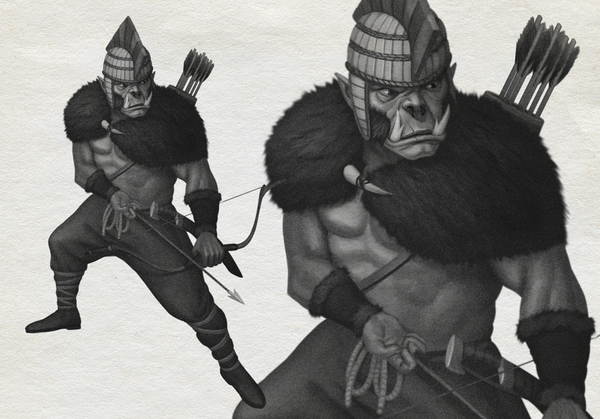
Goblinoids - Goblins and Hobgoblins

Enslaved and oppressed by fallen empires. Classic and eternal enemies of adventurers and civilization in the present. The goblinoids went through a great change after the end of the Retaliations War, changing the perspective of their future.

Makhila Segovax by AlexandreLeoniART
You are a mighty beast, but these people won't be your prey. Barkatu, agur.
-Makhila Segovax, hobgoblin hunter renowned in the empire, among goblinoid tribes, and beyond.

Challenges of the Past


     Hobgoblins and goblins appeared almost at the same time, due to the actions of the great Idura. The first became a physical race after Idura conquered a fairy forest, a feast which awakened a rage into the Royal Ents. The revenge was terrible for some: for many years, children throughout the world were born with traits similar to the newly appeared hobgoblins. The goblins descend from these fusions of mortal and fey.

     The loathing of "civilized" people only increased when the goblinoids were enslaved in great numbers by the Amaranthine Empire. Centuries of oppression fed rebellions helped by an invention originated from the many herds they were forced to take care of: the composite bow, a mixture of wood, horn and sinew which could pierce the armour of their masters. The Northern Empire, which sees itself as successor of the amaranthines, still blames the goblinoids for the destruction of their ancestors. The truth is more complicated, for the old empire had more troubles than the goblinoids rebellions. Guided by the wisest goblinoid ethnicity, the maubor, goblins and hobgoblins carved the former imperial lands into the domains of countless tribes. Centuries of tribal conflict happened since then. The Northern Empire acquired millions of goblinoid slaves, many sold by other goblinoids.

     In 1390 Post-Idura, a foreigner calling himself Lord Pain united them under a single banner, defeating tribes and assimilating them under a mix of army and migration. More than two hundred thousand warriors and their families invaded several regions of the Northern Empire, by land and sea. The following Retaliations War lasted from 1399 to 1402. The name comes from the fact that both sides saw it as an answer: goblinoids wanted to punish those arrogant imperials which repeated the mistakes of their predecessors, imposing an order and civilization which saw the "barbarian people" as inferiors; the Northern Empire considered the war as a revenge against those which had destroyed the glorious Amaranthine Empire. Against all expectations, the war ended on a peace treaty in which most of the slaves throughout the empire were freed. Since then, most of the goblinoids went back to the southern lands, forming cities and tribal confederations, for they learned how strength comes from union. Many settled in areas of the empire while others, mostly former slaves, became imperial citizens. The consequences of such changes still occur in the Goblinoid Lands and the northern fiefs.

Heroes of the Present


     Nowadays, with the migration of huge numbers of goblinoids into the imperial social classes, their presence is as common as many other races in the urban scenery.

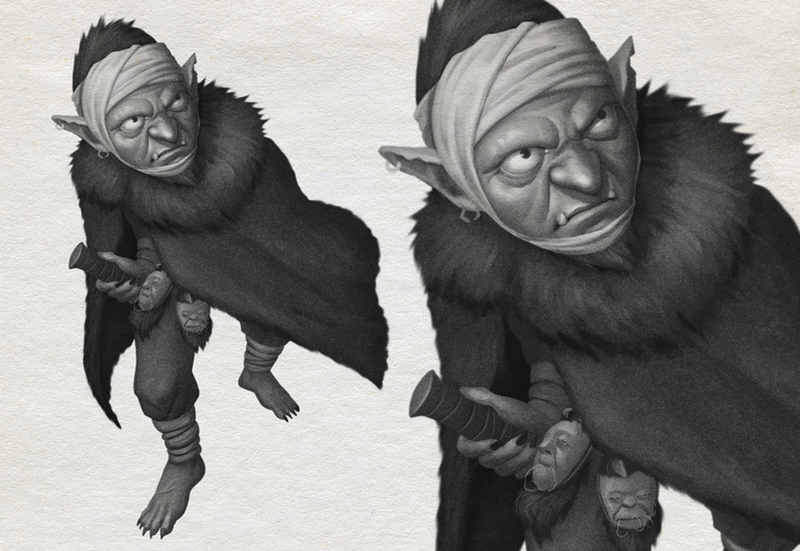
     Goblins find it every easy to join the urban labyrinth of the big cities, and one can find them in the rumble of the markets as well as the dark alleys. Some even show talent beyond expectations and conquer greater status, as business owners and even nobles (although, in human cities, goblin nobles are still rare). Most are obsessed with collecting some kind of item: spoons, parts of defeated enemies, pretty rocks etc. Some prefer more abstract things, like stories and friendships. The sought after item usually determines the goblin's profession and attitude. A rogue may simply seek opportunities to gather padlocks, a shoemaker wants to use every possible type of leather for his shoes.

     Hobgoblins don't appreciate the confusion of cities. They seem satisfied with occupying the woods and jungles, devoted to nature, spiritism and ritualism. The oppression that the so called "civilized" people caused them still weighs on their racial soul. But they still found their place as hunters, shepherds, veterinarians and archers, specially in the imperial army. The huge majority of them believes that every individual has a spiritual brother, usually an animal which was born close to the hobgoblin tribe and roughly at the same time. The "animal-brother" is seen as a family member and a guardian: someone which is always watching and reminding one to walk the right path with this new chance.

     Due to all this, of course, the goblinoids wouldn't be different from the other races with which they share ground on Ghara and adventurers aren't unusual. Adventuring parties with goblinoid members, or even entirely formed by goblinoids, have become a more frequent sight. Some even got a certain renown similar to local heroes. It is becoming ever more likely that there are legendary members, like those of other races, decorating the statue rows in the cities.

Goblinoid Traits


     The goblinoids share the following traits:
  • Ability Score Increase. Your Dexterity score increases by 2.
  • Darkvision. Accustomed to twilit forests and the night sky, you have superior vision in dark and dim conditions. You can see in dim light within 60 feet of you as if it were bright light, and in darkness as if it were dim light. You can't discern color in darkness, only shades of gray.
  • Stealth Proficiency. All goblinoids are proficient on the Stealth skill.
  • Languages. Goblinoids speak, read and write in Common* and Goblinoid**, using the common alphabet. The goblinoid language has many sharp consonants which often express more through their sounds than their literal meaning.
  • Ethnicities. Next is a brief description of the two most common ethnicities in Ghara: goblins and hobgoblins.

https://img00.deviantart.net/66f9/i/2015/162/6/5/taliok_dark_veil_by_alexandreleoniart-d8wvkh1.png
I'm almost giving up on shrinking this huge head and turning it into a shelter for my collection.

- Taliok Manto Negro, greatest bounty hunter of the Northern Empire. He collects specific objects like all goblins, in his case, the heads of fallen enemies. Currently trying to shrink the head of a dragon, payment for services rendered to the Boreal Crown.


Goblin (Ghara)


     Ghara's goblins are eccentric, creative, cunning and independent people. These beings have an easiness to adapt to the most diverse and adverse situations, using little resources. They like to solve problems and often boast of their garish solutions: " what matters is that it was all okay at the end."

     Goblins live squeezed among families of dozens, in an eternal mess. Due to this, they easily become used to rowdy places and even feel affinity with the mess (whether their or of others). As k a goblin to count all the silver of a dragon's hoard and he will do it with the precision of  a genius, even if he might restart many times, just to "be sure".

     It is speculated that this behavior is like a certain "organized insanity" which is adapting to their new life as civilized beings. Whatever the reason, their way of seeing things is often useful, even in a life of adventures, where challenges are put on their way all the time.

  • Ability Score Increase. Your Intelligence score increases by 1.
  • Speed. Your base walking speed is 25 feet.
  • Age. Goblins reach maturity at about twelve years old, and may live up to fifty years.
  • Size. Goblins average about 3 feet tall and weigh about 40 pounds. Your size is Small.
  • Investigation Proficiency. All goblins are proficient on the Investigation skill.
  • Nimble escape. You can use disengage or hide as a bonus action.
  • Goblin Tinkering. You know how to improvise and believes that not always (almost never) the perfect resources will be available to overcome challenges. Once very short rest you may use objects on sight to improvise a weapon, tool or even protection. Under the GM's discretion, you may use trinkets and other things you carry with you (or your group).
    • When using this ability, choose one: you create a melee weapon which causes 1d6 points of damage, either bludgeoning, piercing or slashing damage, and has up to one propriety; or a ranged weapon with range 30/60 feet, which causes 1d6 points of either slashing, bludgeoning or piercing damage, up to a single propriety and ten projectiles; or a light armor which gives AC 12 + Dex modifier; or an improvised tool which allows you to apply your proficiency into a single relevant ability check.
    • Any created weapons and armors usually last a single encounter (or one minute) before becoming useless, but could last longer depending on their usage and maintenance. A tool lasts until the end of an encounter, or one minute, or after being used (independent of success or failure int he respective roll)
    • You must search new objects and materials to use this ability again. You may not recycle the same materials.
 

Hobgoblin (Ghara)


     These beings group themselves in different tribes lead by the most wise and protected by the most brave and capable warriors. The hobgoblins developed their mastery of ranged weapons to such a point that they're as feared as an elf archer hiding on the woods (the elves obviously deny it). True or not, it is clear that there is a rivalry between these races which often end up occupying the same roles in peace and war. Open conflict between both are rare, at least mortal ones.

     Hobgoblins are proud of their ancestors, seeking the wisdom of these spirits which constitute the "racial soul" to solve problems. The only thing which might offend a hobgoblin more than insulting his family (and this includes the animals which which he shares space) is offending his ancestors.
  • Ability Score Increase. Your Wisdom score increases by 1.
  • Age. Hobgoblins age in a similar fashion to humans, reaching maturity by the time they're 16 and living as much as them.
  • Size. Hobgoblins are about the same size as humans, ranging from 5 to 7 feet tall. Your size is Medium.
  • Speed. Your base walking speed is 30 feet.
  • Ancestors' Omens. You have the ability to briefly communicate with the ancestral spirits of your race, to ask advice in your journeys. You start by performing a ritual hunt. You decide what you'll hunt, usually depending on where you are (you may try to hunt a beast in the woods, or even a rat in a dungeon). At the end, the hunt's result will provide you with clues about a future event or action.
    • This ability works exactly as a ritual version of the Augury spell (including the cumulative percentage of obtaining a wrong answer). However, it always last 10 minutes and the result for your doubts will come through the results of your hunt. For example, instead of simply receiving the Woe omen, you might have a bad feeling upon focusing about the way the blood drops from the carcass of the fallen animal.
  • Skill Proficiency. You are proficient with the skill Survival.
  • Wildcunning. Whenever you make an Wisdom (animal handling) check related to wild animals, you are considered proficient in the animal handling skill and add double your proficiency bonus to the check, instead of your normal proficiency bonus.

*Portuguese in real life.
**Basque in real life.