domingo, 28 de abril de 2019

The Origins of Kahonua and Kosinbia

  Sacrificing yourself for the greater good is a virtue. Dying for nothing is a sin. -Amanirena “snake-cutter” Thákame, herald and prophetess of Kahonua. Prayer of Moto Mapokeo Ya (Fire Folklore), Volume Five.


     Why Kahonua and pyromancers are so important on Kosinbia, to the point that the region despises and even vilifies another ways of magic and other gods? It is because the very idea of "Kosinbia" was born through the pyromancers and the volcano goddess.
     
     The whole region was once divided into countless tribes and groups which could share things such as language, race and difficulties, but didn't saw themselves as equals or part of something greater. In fact, the most common trouble for all were the rivalries and fighting with neighboring tribes.

     In this fragmented world, there were two nomad tribes, unique and somewhat accepted by all:


  • Oayas, predecessors of the pyromancers, were as respected and feared as witches, shamans or wizards, bringing troubles and solutions in equal measure. They worshiped the zebra-goddess Nuami, one amongst many other deities exclusive of one tribe or another. Their blend of supernatural martial art and ritual dance was based on zebras fighting, and practiced in the surroundings of volcanoes.

  • Khayas were iron miners and traveling blacksmiths. But because they kept their techniques to themselves, they were mystified by the other tribes, for they knew how to "turn the earth into spears and swords". Their totem was the termite, called Kahomi, for the clay of the termite hives was one of the secrets used to make their furnaces.

     Both groups had no affinity between themselves. Sometimes, a child of the Khayas was sent to the Oayas for their family thought she had a talent for pyromancy and vice versa. This was common among all the tribes which specialized into an art or craft and had youngs which didn't fit for one reason or another, many of which had nothing to do with talent: a benign way to exile the "black sheep" of the community.

     This was the origin of the future prophetess Amanirena Thákame. She was born among the Khayas, but was taken to the Oayas after her parents died in an orc attack which also prevented her relatives from raising her. The girl wasn't killed in the attack because she managed to throw the orc which killed her parents into the furnace they used. It was seen as a sign that her future was tied to fire.

     Being a teenager when she entered the pyromantic tribe, her perspective ended up being a mixture of a blacksmithing childhood with flaming maturity. In some uncertain moment she defined the idea of union among people hostile to each other, but which knew how to speak and love, against a greater evil: the orcs.

     The oral folklores offer several versions for how she united the two tribes in such a way, that the deities themselves fused into a new goddess which mixed fire and earth into the symbol of the volcano, Kahonua. The romantic version is that she managed to do a wedding ritual for a couple of gods which already loved each other from far away; the most mundane version claims she impressed the blacksmith tribe with a fire so hot it could make steel and the pyromantic tribe when she produced "fire from stone", gunpowder, and thus convinced both how the whole could be more than the mere sum of its parts; another version speaks that she married or got involved with important men on both tribes, influencing them through such men; there are also versions more sordid or peaceful, tragic or mystic. Perhaps those sages which try to rebuild the facts by merging the many versions are closer to the truth.


     What is clear is that she started to lead a nomad alliance which used steel and fire as carbon steel blades, martial arts tempered with impressive magic and something completely new, the first firearms. Primitive cannons and handgonnes, cast in iron and bronze, using a mixture that, perhaps, no one would have discovered without the cultural and religious motivation for it: gunpowder. It was hard to counter the argument that union brings strength when the result breaches stone walls, scares men and animals, kill orcs before they touch you and can be used by anyone with minimal training.

     However, Amanirena didn't use firearms. She wielded the spear Wachumatu and the machete Nyoka-Auaye, both made from the iron which was left in the furnace into which she pushed the orc which killed her parents, now shaped as red-hot blades. The prophetess taught that kill someone was a waste, for a life may and must be sacrificed only for the greater good. Punishments were another matter. With her incandescent blades, she cut and cauterized criminals: fingers, ears and other parts which the guilty had to learn to live without. Executions happened only when someone committed so many crimes that there were no parts to cut anymore.

     Thirty years later, she unified the tribes, organized them into principalities, instituted the amani tradition and began the construction of the Sacrificial Bastions. When her duty was fulfilled, came the reward: the goddess of fire and earth turned her prophetess into the first Nyokakuba, mother of all the others. And in this shape Amanirena lives until today in her nest, the sacred volcanic caldera called Kahonuterasi.

sábado, 27 de abril de 2019

Dhalikastra

I saw a forest made of trees whose roots were made of hundred of fingers, each one with a thousand knuckles; sprouting eye-fruits and ear-flowers; trunk with a bony bark and teeth instead of thorns; great locks of hair in place of leaves.
 -Litua Kortos, lilim of the Dhalikastra's garrison.

     This fortress' role has been to lure nefilims for the last four hundred years, drawing the evils of the Unquiet Lands. If something conquers it one day, the garrison has the duty of warning the world of this. Dhalikastra is shaped as a titanic hexagonal prism, red and bright amidst a land of an opaque, dead grey. The radiance pours out of the goddess Dhalila herself. It sustains, protects and heals the defenders, at the same time attracting nefilims like ants seeking sugar. And when they come, the guardians gather in walled balconies and shoot from arrowslits, protected by heavy adamantine armors. The latter are reinforced with leather and cloth to portect their users from the toxic elements and the ocasional vacuum of the Unquiet Lands. Every helmet must have a glass-sap visor and miasma filters.

    The current castellan is Volya "Smeyas". A blond shardokan, with dark circles under his eyes and grey spots in the arms, wielding a flintlock grenade launcher. Like all which stay here, he adopted a new name for a new life, leaving his old self outside the Unquiet Lands and the terror that they create:
My babuskha, Valeria, told me how the man she loved was attacked from within his own guts, and how she had to kill what was left. She told me of a voyage which lasted a year more than it should, being awakened in the midnight by a feeling of pain and finding saliva and bite marks where it hurt. May Corallin forgive my baba for burning down a forest to escape the Thing That Laughs. When baba died, I sacrificed ten sheep to Corallin so her soul would reincarnate into a better life. Then I came here. Volya means "freedom". I spent my entire life afraid of the stories about the terrors and carnages she saw. I was tired of being afraid, of being a victim of these bastard things with larval teeth. Now, even amidst this hell, I'm happy. You can't imagine how good it feels to be free of the fear which was more intimate to me than my own parents. My nickname here is Smeyas, which means "the one which laughs", because I can laugh in the worst situations. Half of it is due to despair, the other half for the happiness in finally reacting upon my fears, all of it for the chance of exploding a nefilim.

     Like Volyas, most of the defenders had their life marked by nefilims in one way or another. Many came from exile colonies for those which suffer from nefilim leprosy, administered by the Lazarus Order.
Anyone may be a volunteer, no matter the race, beliefs, crimes or status. As much honor as can be had among men and gods, amidst enemies on the battlefield, there can be no honor nor peace among mortals and nefilims. The lilims themselves agree with this. We're all equal when facing nefilims, just food and fun for them. They will regret teaching us to be equals.
     Here also lies an observatory meant to identify nefilim falling nests and the place of their crash. Most of the nests come from the Gharian Planetary Ring, therefore having rich adamant veins. Dhalikastran expeditions depart to eliminate the infestations and claim mining rights over these asteroids. Part of the extracted adamant goes to Dhalikastra. The rest is sold to sustain the exile colonies and the cult of Dhalila.

quinta-feira, 11 de abril de 2019

137 links e materiais para construir mundos

File:Bibliotekarien.jpg

Imagem obtida aqui.

Quer construir um ou mais mundos para a sua campanha, livro ou por diversão? Não sabe por onde começar? Experimente os recursos abaixo! Tenha em mente que alguns links abaixo são conversas do 4chan, então incluem racismo, ignorância e postagens nada a ver com o tema. Mesmo assim são interessantes.


Um guia para construir o seu mundo de fantasia.

2) http://arcadia.net/Cruinne/DnD/Articles/worldbuilding.html
Uma lista dos elementos a se considerar quando se constrói um cenário detalhado.


Bestiário


Um site dedicado a documentar e desenhar criaturas e monstros do mundo inteiro.

Bestiário medieval.

5) https://auroswords.com/hic-sunt-dracones/
Informações em inglês e espanhol sobre dragões.

6) https://www.blackdrago.com/
Site sobre dragões.

Enciclopédia de demônios do mundo inteiro.

8) https://archive.org/details/AChineseBestiary/mode/2up
Bestiário chinês.

9) https://archive.org/details/EncyclopediaOfUndead/mode/2up
Enciclopédia de mortos-vivos.

10) https://archive.org/details/EncyclopediaOfVampireMythologypdf/mode/2up
Enciclopédia de vampiros.

11) https://archive.org/details/BriggsKatharineMaryAnEncyclopediaOfFairies/mode/2up
Enciclopédia de fadas.

12) http://patagoniamonsters.blogspot.com/
Blog sobre monstros da Patagônia.

13) http://suptg.thisisnotatrueending.com/archive/33071790/
Sobre lobisomens.

14) http://suptg.thisisnotatrueending.com/archive/4847968/
15) http://suptg.thisisnotatrueending.com/archive/18442709/
Sobre vampiros.

Cartografia


Um fórum inteiramente dedicado à criação de mapas.

Para quem deseja criar planetas, sistemas solares e outros objetos astronômicos.

Como desenhar um mapa em GIMP ou Photshop.

Um programa gratuito para fazer mapas de fantasia.

Esse é para quem quer simular placas tectônicas.

Como criar mapas plausíveis.

Permite criar desde masmorras a continentes, tanto para fantasia quanto ficção científica.

Para quem quer melhorar os seus rios.

Lições para quem quer fazer o seu mapa.

25) http://www.guildcompanion.com/scrolls/2014/aug/climatefinder.html
Para ajudar a determinar o clima de uma região específica.

26) https://space.geometrian.com/calcs/climate-sim.php
Simulador de climas.

Ambos os links acima ajudam a entender placas tectônicas.

29) https://deepnight.net/tools/rpg-map/
Para fazer mapas de lugares, como tavernas e calabouços.

360 mapas históricos de cidades, da antiguidade ao século 21.


"Conlanging", a construção de línguas fictícias. 


Recursos diversos para construir línguas.

Uma ferramenta para ajudar a construir línguas faladas.

33) https://www.vulgarlang.com/
Uma ferramenta apara ajudar na criação de idiomas imaginários.

Evolução Especulativa


34) http://worldbuilders.info/
Projeto colaborativo para desenvolver o planeta imaginário Epona.

35) http://www.planetfuraha.org/
Projeto para desenvolver o planeta imaginário Furaha.

36) https://canopy.uc.edu/bbcswebdav/users/gibsonic/Snaiad/snduterus.html
Projeto para desenvolver o planeta imaginário Snaiad.

37) https://sunriseonilion.wordpress.com/
Projeto para desenvolver o planeta imaginário Ilion.

38) https://speculativeevolution.fandom.com/wiki/Main_Page
Wiki sobre evolução especulativa.

39) https://specevo.jcink.net/index.php
Fórum sobre evolução especulativa.

40) https://exobiotica.tumblr.com/
Formas de vida imaginárias.

41) https://seademons.weebly.com/
Um site dedicado a imaginar um planeta Terra onde muitos monstros marinhos são reais.


Fóruns


Tem uma questão histórica? Pergunte a um historiador aqui!

O reddit específico para construção de mundos.

Esse site é inteiramente dedicado a perguntas e respostas de “worldbuilding”.


Geradores


Gerador de palavras para línguas construídas.

Gerador de brasões.

Gerador de mapas continentais para fantasia.

Inúmeros geradores para as mais diversas razões.

Um site contendo dezenas de geradores.

Gerador de ilhas.

Não apenas gera nomes fantásticos, o site tem geradores descritivos, um gerador de lemas, outro gerador de brasões etc etc.

Gerador detalhado de cidades, mapas inclusos.

Gerador de mapas de aldeias.

Gerador de cidades, cria lojas e PdMs, mas não inclui mapas.

Outro gerador de cidades, cria PdMs com regras para D&D 3.5

Gerador de mapas urbanos.

Gerador de reinos.

Outro site com muitos geradores diferentes.

Lista de geradores aleatórios.

Gerador de cidades. Cria um mapa, mas ele é muito básico.

Gerador de mapas planetários.

Gerador de mapas de aldeias, cidades, metrópoles etc.

Gerador de aldeias a metrópoles, muito detalhado e que gera um mapa razoável.

64) https://www.nomesdefantasia.com/
O nome já diz tudo.


Miscelâneas


Detalhes sobre piratas, a sua historia, piratas famosos, vida a bordo de um navio pirata etc.

Para quem quer saber mais sobre as mais diversas embarcações usadas ao longo da história humana.

Como o nome indica, coisas interessantes: plantas que emitem calor, circuitos desenvolvidos conforme a teoria da evolução...

Uma guia sobre construção de mundos, com 312 páginas e escrito por vinte autores.

Outro guia de construção de mundos. Escritores incluem Monte Cook, Keith Baker e vários outros.

Testemunhos escritos dos mais diversos momentos históricos.

Sobre como nomear lugares.

Se o seu cenário inclui aventuras espaciais, sugiro consultar esse site.

Um guia extenso de xenologia, a ciência que estuda formas de vida extraterrestres.

74) https://archive.org/details/Encyclopedia_Of_Agriculture_And_Food_Systems/mode/2up
Enciclopédia de agricultura.

75) http://flyingpenpress.com/DavidRozansky/blog/government-types/
Tipos de governos para fantasia e ficção científica.

76) https://medium.com/migration-issues/notes-on-medieval-population-geography-fd062449364f
Informações sobre densidade populacional medieval.

77) http://www.foodtimeline.org/index.html
Uma extensa e detalhada linha do tempo sobre comida.

78) http://inkwellideas.com/worldbuilding/worldbuilding-religion-design/
Guia sobre como criar uma religião fictícia.

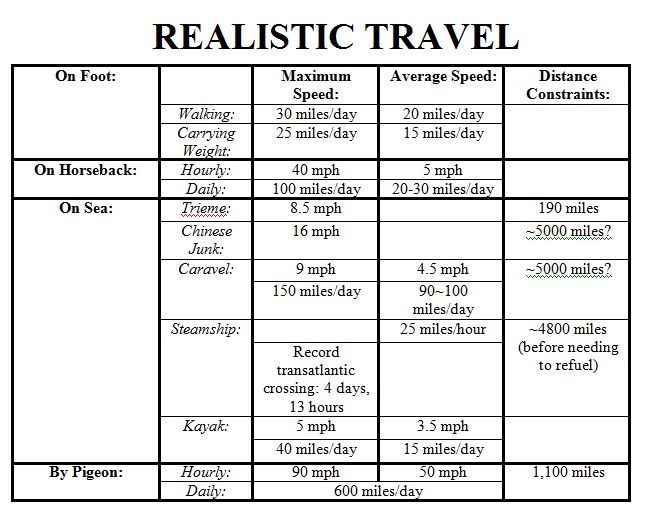
Tabela sobre tempos de viagem realistas.

Site sobre lugares diferentes e pouco conhecidos.


Organizando as anotações


Os links abaixo são para sites e aplicativos que ajudam você a pôr ordem na bagunça de informações sobre o seu mundo ou cenário. Não acho que um ou outro seja melhor, sugiro testá-los para ver qual é mais do seu agrado.


Questões Militares


Blog que informa sobre o exército bizantino, suas forças, batalhas e estratégias.

Um blog dedicado a explicar sobre o exército chinês da Era Ming. Inclui curiosidades como armaduras feitas de papel.

Saiba mais sobre como os mestres europeus lutavam com uma espada em cada mão.

Informações acadêmicas sobre guerra medieval. Inclui fontes primárias.

94) http://www.salimbeti.com/micenei/
Sobre armas e guerra durante a Era do Bronze Grega.

95) http://www.freelanceacademypress.com/duelingshield.aspx
Sobre o escudo de duelos.

96) http://www.atarn.org/frameindex.htm
Site dedicado à arquearia asiática.

97) http://myarmoury.com/features.html
Dezenas de artigos sobre armas, armaduras e exércitos.

98) https://sellsword.wordpress.com/
Informações sobre mercenários medievais, renascentistas e pós-renascentistas.

99) http://warshipsresearch.blogspot.com/
Sobre navios de guerra, da Antiguidade ao século 20.


Referências culturais e mitológicas


Ideias de como usar os diversos folclores africanos em fantasia.

Informações sobre o folclore chinês, e como usá-lo em fantasia.

Um livro inteiro sobre a Índia da Era Mogul.

Detalhes sobre cada cultura existente no mundo.

Para saber mais sobre a mitologia germânica.

Mitologia dos inuits, também conhecidos como esquimós.

Minúcias da mitologia japonesa que você nunca viu antes.

Dedicado à história antiga. Gregos, romanos, garamantes...

Tudo sobre a Era Medieval.

Coleção extensa de textos a respeito da civilização romana.

Coleção de textos sobre dezenas de mitologias e culturas. Inclui até fantasia pré-Tolkien, como o venerável Lorde Dunsany.

Detalhes, embasados na arqueologia, sobre os gregos durante a Era do Bronze. Se Hércules e Aquiles existiram realmente, eles eram conforme descrito aqui.

O site mais completo que existe sobre a mitologia grega.

113) https://archive.org/details/OBrasilDosIndios/mode/2up
Para descobrir o Brasil pré-Cabral.

114) https://pib.socioambiental.org/pt/P%C3%A1gina_principal
Site sobre os povos índigenas do Brasil.

115) willsull.net/resources/HumanUniversals.pdf
Uma lista dos elementos universais das culturas humanas.

116) http://www.gutenberg.org/wiki/Folklore_%28Bookshelf%29
Livros de folclore de diversas culturas.

117) http://www.gutenberg.org/wiki/Anthropology_(Bookshelf)
Livros de antropologia.

118) http://www.gutenberg.org/wiki/Category:Religion_Bookshelf
Livros de e sobre várias religiões.

119) https://pantheon.org/
Enciclopédia de mitologia, folclore e religião.

120) http://www.iranicaonline.org/
Enciclopédia online sobre a cultura iraniana.

Enciclopédia sobre o Budismo.

122) https://archive.org/details/EncyclopediaOfIndoEuropeanCulture/mode/2up
Enciclopédia sobre a cultura Indo-européia.

123) https://archive.org/details/EncyclopediaOfTheAncientGreekWorld/mode/2up
Enciclopédia sobre a Grécia Antiga. 

124) https://archive.org/details/ConstanceA.JonesJamesD.RyanEncyclopediaOfHinduism/mode/2up
Enciclopédia sobre o Hinduísmo.

125) https://archive.org/details/EncyclopediaOfAncientAsianCivilizations/mode/2up
Enciclopédia sobre as civilizacões asiáticas da Antiguidade.

126) https://archive.org/details/EncyclopediaOfAncientEgypt_201802/mode/2up
Enciclopédia sobre o Egito Antigo.

127) https://archive.org/details/historyanddescr01porygoog/mode/2up
Descrição da África, escrita por Leão, o Africano, um mouro que viveu no século 16.

128) https://archive.org/details/cu31924020419275/mode/2up
Mitos do México e do Peru.

129) http://www.mangkukulam.com/
Folclore, mitologia e monstros das Filipinas.

130) https://hariragat.blogspot.com/2014/03/building-southeast-asian-settings-part-i.html
131) https://hariragat.blogspot.com/2014/04/on-southeast-asian-settings-part-ii.html
132) https://hariragat.blogspot.com/2014/05/highland-southeast-asia-for-your.html
Os três links acima dão dicas para criar cenários baseados no sudoeste da Ásia.

133) http://sms.zrc-sazu.si/index.htm
Jornal de estudos mitológicos eslavos.

134) http://suptg.thisisnotatrueending.com/archive/49940009/
Informações diversas sobre Siquismo, beduínos, pachtos e berberes.

135) http://suptg.thisisnotatrueending.com/archive/18350298/
Sobre como desenvolver um cenário de fantasia baseado nas 1001 Noites.

136) http://suptg.thisisnotatrueending.com/archive/55657420/
Ideias e dicas para criar um cenário baseado na Ásia Central.

137) http://suptg.thisisnotatrueending.com/archive/47922177/
Informações sobre o folclore judaico.

segunda-feira, 19 de novembro de 2018

Slavery in the Northern Empire


https://blogger.googleusercontent.com/img/b/R29vZ2xl/AVvXsEhoyAIlrh85PmxVD3RRBbl7LYdidAc6pnW8xrFFdrnMaacGTZT2rrXsBLPpLA-TwHapW4mgoFnzhaitNDHlX2VVq2BAUTr4f9UNpCcrD6Ii2pj6DRKQhrA-Zmx4RWG-3RSrCJrilk55BA/s1600/Boulanger-gustave-clarence-rudolphe-french-1824-1888-the-slave-market.png

All people are born unequal in the Northern Empire. A few have more rights and duties than most, due to the privileges of an aristocratic title. Most are free men, from the hungry peasant to the merchant buying another ship. A lot has few rights and many duties: slaves. Slavery is more than a chain around your neck. It is the disdain from whoever passes by, the feeling of knowing exactly how much you are worth to others, the restrictions you follow on reflex. But controlling the body is easier than controlling the mind, and being a slave is a condition marked by punishments and curfews. Even so, the familiarity and possible secrets known by a slave may make an owner as fearful and hateful of a slave as the latter is of the former Not only individuals and families, but institutions and organizations such as temples, guilds, fiefs and the empire itself can own slaves. Among the few rights slaves have, are included: they can't be beat on public; the assassination of a slave is considered a crime of murder, and not destruction of propriety; and all slaves may even receive a monthly wage, accumulating and using it to buy their own freedom.

On average, slaves have difficult lives, often brutal and short. But like all averages, this represents a huge variety of situations. And like in every social class, there are subdivisions. A slave's condition reflects his or her job. A veterinary slave of the Northern Empire is much more important, respectable and expensive than a public slave ordered to clean the streets of the city which owns him. A physician slave has living quarters and social status far beyond an ordinary citizen, although the latter has a greater legal status. Loyalty and trust also make a difference: the newly grown up elf may give freedom to the dwarf nanny which took care of him in his childhood. Another important slave's jobs include treasurer, overseer, secretary, gladiator etc. In the other extreme, mine workers may have their lives counted in months.

Melucia's cult fights against the bad treatment common in the commerce and use of slaves, for they consider it contrary to the principles of love and pleasure of their goddess. Many of her temples don't accept faithful which own slaves, and petitions to close slave markets are common. They also finance several adventurers, know as "Lovers of Freedom", which fight against slavery. They usually board slave ships in the seas, and many don't limit themselves to illegal trafficking, freeing and helping slaves whose ownership is legal in the eyes of the Empire. The cleric of Melucia, the countess Eliseé Beminni, regularly buys slaves through third parties to then free and equip them, so that they may attack enslavers outside northern territory. Their favorite target is usually the city Numantia Berriak, a market in the Fiery River from which leave tens of thousands of slaves every year. Some years ago, the local chieftains wrote a letter to the emperor Basileus, asking for intervention, friendship and free trade. They were ignored.

Ourgos is also a god popular among slaves, for he represents hard work, and also why many artisans are or were slaves and acquired freedom through their craft. The slaves belonging to the cult of Ourgos are usually more valued, for manual work is a way to worship the God of Labour. Another god important to the slaves is Carnificius. In his role of divine punisher, he is worshipped by slaves which may pass through unfair punishments. Many of the servants of the God of Death, the maganchos, are slaves themselves, punishing owners and masters which abuse the people which belong to them.

Slave escapes can happen any time, anywhere. The problem is that this facilitates the existence of vampires, which can abduct a slave in the security that said slave is considered a runaway. Even great urban centers can house vampire covens due to this, and many regions have thorough slave censuses for this reason. However, there are rumors about the duchy of Chouette. This is one of most recent duchies, established in the northern shores of the Fiery River only seventy five years ago, thinly populated and very reliant on slaves for its economy. Carnificius' cult is specially strong here, not only due to the huge number of slaves, but also because they are the main opposing force to the vampires infiltrated in the aristocracy and administration. Here, many maganchos specialize in hunting vampires, undergoing a war hidden behind slave uprisings and class conflicts.

At the end, imperial slavery implies a bizarre kind of equality. Anyone in the Empire can become a slave if they have bad lucks such as debts, kidnapping, political intrigues, exile, crime, trickery, defeat in battle etc. And while imperial scholars debate the merits and problems of slavery, they leave out a common and meaningful effect: that anyone can look around and see someone in a situation so bad that one feels better in response. This is possible even for most slaves, and perhaps the best stimulus to please their owners and acquire their freedom.

Hope is the vice of the hopeless.
-Graffiti found at the back of the slave market at the city of Raeti.

sábado, 17 de novembro de 2018

Umoks

Creatures slither across the humid jungle while powerful jaws drip. A bamboo grove blocks the way: the creatures bite and tear apart trunks as if they were just sticks. Soon those mouths would split open the enemy's armor in the same way.
Mauleosteus, nicknamed "Maul". Exiled from his tribe, he chose the Northern Empire as his new one. His efforts in exploring the umok archipelago for the northern civilization granted him an imperial citizenship, the title of "dom" and his very own caravel. Maul is unique among his race for having some reptilian traits such as the type of scales. After speaking with a shaman, he says that he reincarnated with traits of his former life. Despite his appearance, he is quite friendly towards new people.

The umoks waited in the water. Being hooked by them was the end: no one returned from the dark and increasingly red waters. And despite the screams of pain, the rattling of swords and the rhythm of the waves, there wasn't a stronger sound than the bellowing of the gongs the umok war bards fastened to their arms like shields. That terrible rhythm was only broken when the gongs were actually used for defense, against brave northerners which learned the strength of the arms and clubs which hit the gongs. The songs in rough voices coming from bloody jaws foresaw the defeat that the empire would suffer that day.
-Lucan de Camina, author of Norteia, epic about the first northern expedition to the umok's home archipelago and the Battle of the Sharks.


Legends and Oral Traditions

https://upload.wikimedia.org/wikipedia/commons/thumb/a/ae/Nagas_Royal_Carriage.JPG/320px-Nagas_Royal_Carriage.JPGThe umoks believe that their chaotic character and physical traits come from their origin. Each tribe seems to have a different version, but the myth goes more or less like this: a group of dragons similar to sea serpents, the kupuas, were jealous of their draconic cousins of Drakhazin, for they had the obedience, fear, loyalty and even love of races like the zitai. Mo-o Inanea announced he knew Kane, a secret island where the clay was so full of life, it could be used to create their own race. The kupuas hurried in using it to sculpt the umoks. They started with a version based on a certain animal, but soon grew bored and tried other versions using new creatures:fishes, reptiles, amphibians and even mammals were copied. This cycle repeated many times until Kiha-wahine suggested that they picked up a trait of each version: After discussions and fights, they decided for the variations that the race has up to this day: a member of the race can be born with one of many types of heads, like eels, sharks, placodermi, piranhas and every type of carnivorous fish. The umoks believe that this chaotic process made them naturally adverse to boredom when compared with the other races. This trait also prevented them from completely serving the kupuas, although umoks regard the latter as sacred ancestors to which they offer tributes and sacrifices. These entities are said to live to this day in secret islands, tribal sanctuaries that only the shamans know.


Anarchic Heritage


The umoks are beings of rough constitution; bestial and hybrid appearance; savage, dynamic, chaotic and, often, inconsequential behavior. Natural amphibians, umoks make good pirates and quickly adapt to the intricate reefs and sea currents where their tribes raise their homes. They are creatures that feel compelled to let go of routines and hardly remain in a single place for long. Most umoks live in nomadic tribes dedicated to hunting, fishing, gathering and plundering, or offer their skills to people which might pay more or offer good life conditions. One in each ten umoks is an adventurer, explorer, merchant or hunter of sea beasts. While adventurers are marginalized in the imperial society, among umoks they are the center of attention. The objective is to gather fame, fortune and followers to create your own tribe and be immortalized in the latter's legends. A common way to do so is accumulate treasures in the tribal refuges where the ancestors' remains are laid down and/or lives one of the dragons which created the race. One never knows when a kupua might return and be impressed with the adventurer's dedication. The rewards vary: secret information; powerful blessings; the location of sunk treasure; or even the privilege of escorting the dragon on his next swim.

https://upload.wikimedia.org/wikipedia/commons/thumb/b/bb/Sail_plan_tepukei.svg/231px-Sail_plan_tepukei.svg.png Great navigators, umoks value the building of vessels. The master artisans have each their own techniques, but they also incorporate foreign elements or renovate salvaged ships. The exclusively umok traits of a ship are: using bamboos of the umok archipelago; and mouth-like sails. Speed and agility are deemed more important than resistance or the volume of carriable cargo, resulting in many thin-hulled catamarans.


Places

  • Hundreds of umok tribes live in Umokaong, an archipelago so vast and labyrinthine that no one has managed to completely map them. At some places the ocean seems more like many salty rivers divided by reefs, sand banks and islets. The Northern Empire currently dominates Ibalong, a triangle-shaped great island, with a volcano in each corner: Hantik, Kolasi and Isarong. The geography is diverse: plains suitable for water buffaloes with huge curved horns, plantations of the valuable sugar cane, umok coastal villages, floating markets and hundreds of canoes; entire lakes dedicated to raise armored catfishes which eat wood and cane berry, named "cascudos"; mangroves where everything tastes like salt; northerner communities with colonists of many races; bays which can house a whole fleet; two mountain chains with icy peaks and active volcanoes; jungles with not even the umoks fully explored.  
  • Tavira Shore - This city is the greatest concentration of umoks in the whole empire; many of which were born here. The population is spread out along a rocky peninsula shaped like a horseshoe. Many sea currents meet nearby and islets appear at the low tides. Dozens of ships run aground along the years were turned upside down and raised over stilts to serve as houses. Fishing and aquaculture sustain over twenty thousand inhabitants. The community exists due to four treasures that only umoks can fully explore: pearl farms among the rocks, using secret techniques to produce pearls in many sizes, shapes and colors, including variations specific to sacrifice to Nyxcilla; whaling expeditions bring much meat, oil, ketin and bones to the city, at least the ones which return; seaweed orchards have many alchemical uses; the amphibian race also put many nets in certain places to catch drifting items, be them wood, wounded whales, empty boats, leather shoes, lobster or chests fallen off ships. The wealth accumulated by the local leader and merchant, Perolos de Ergas, was enough for him to buy the title of viscount and transform a galleon into a floating fortress. He also has the attention of rich and politically relevant clients. This exotic noble raised an amphibian militia which uses halberds and brass cuirasses decorated with black and red pearls. They have a lot of experience in fighting pirates, smugglers and giant crabs amidst the semi submersed caves, mangroves and a graveyard with anchor-shaped tombstones which contains as much ships as peoples.

Umok Traits


  • Speed. Your base walking speed is 25 feet and your base swimming speed is 30 feet.
  • Amphibious. Umoks can breathe underwater as well as out of it.
  • Weapon Proficiency. You are proficient with acangapemas, nets and spears.
  • Skill Proficiency. You are proficient in survival.
  • Chaos Jaws. All umoks have powerful jaws which he can use to attack as a natural weapon which causes 1d8 points of piercing damage and uses strength for attack and damage.
  • Each umok's mouth also gives him unique powers. Choose a characteristic among the ones below. Optionally, if the Master allows, you can choose one of the options at random. If you do so, you add to the result under parenthesis to your character's traits.
    • 1. Big Teeth - Your bite attack deals 1d10 points of piercing damage (Sharp teeth - you can cause critical hits with your bite attack in a result of 19 or 20 in the d20).
    • 2. Long Tongue - You gain an attack with your tongue. It is a natural weapon which deals 1d6 points of bludgeoning damage up to 20 feet away and has the Finesse propriety (Sticky Tongue - If the target is up to a size category bigger than you it is grappled. If you attack another target, the first one is freed).
    • 3. Toxic Saliva - Choose if your bite attack causes poison or necrotic damage. The final choice remains the same for the rest of your life. (Virulent Saliva - the damage of your bite attack is dealt directly into the target's maximum life and persists until the latter has a long rest).
    • 4. Mystic Voice - You can create an effect of ventriloquism, making so that the sound of your voice comes from somewhere else up to 60 feet away (Supernatural Voice - You can reproduce any sounds you have heard, including voices. A creature that hears you can say if they are imitations succeeding on a Wisdom [Insight] ability check. The DC is equal to 8 + proficiency + your Charisma modifier).
    • Ability Score Increase. Your Constitution score increases by 2 and your Strength score increases by 1.
    • 5. Hungry Throat - You can consume foodstuffs equal to, in terms of quantity, one day's worth of rations, in a single action. Every time you do so, you can immediately use one of your HP dice to heal the same amount of hit points equal to the dice's result + Constitution modifier (Abyssal Throat - If you hit a bite attack against a creature at least one size category smaller than yours, you can swallow the target. The swallowed creature becomes restrained and blind, has full cover against external attacks and other effects, and suffers 3 [1d6] points of acid damage in the beginning of each of your turns. You can only swallow one creature. If you are reduced to 0 hit points, the creature isn't restrained anymore and can escape by using 5 feet of its base speed, leaving prone).
    • 6. Roaring Voice - You can vocalize an extremely loud scream in a 15-feet cone. Creatures in its area must pass a Constitution check. All creatures which fail it must become stunned until the beginning of your next turn. You must have a long rest before using this skill again (Thundering Voice - creatures suffer 2d6 points of thunder damage, or half if they are successful at their Con check. This damage increases to 3d6 at the 6º level, 4d6 at the 11º level and 5d6 at the 16 level).

terça-feira, 13 de novembro de 2018

Greek Fantasy Tips and Ideas


1. CENTRAL THEMES


     Fate is the most important one. No one escapes from it, not even the gods. Countless tragedies and greek myths show the consequences of trying to do so, like Oedipus Rex. But as most players prefer to have good endings, one can assume that their fates are nice or at least uncertain. An attribute of luck or divine inspiration could simulate that. One could also assume the party members are favored by one or more gods, or try to achieve this status. This is as much of a blessing as a curse, for gods may give great privileges as well as becoming furious with any disrespect.

       Worship is like a business contract with someone not very reliable. You ask for something, sacrifice some good wine, cattle, gold or even an entire ship to Poseidon. The gods will decide the proportional help or blessing, be it good results in the dices or Poseidon's hand grabbing the enemy galley. Be careful with what you wish, for the gods may help in terrible ways as to teach lessons. Remember Midas and his wish for gold, which ended up in the loss of his daughter.

      There isn't a canon mythology. Many legends have several iterations, such as the amazons:
A) Go far enough from civilized lands, and you'll find women wearing pants, riding horses, handling bows and axes as well as men!
B) They say in some nomad tribe called "amazons", one can't find a single man. They lay with scythians, sending the boys to their dads.
 C) Others say that they aren't nomads, but have a city in northern Anatolia. There are men there, but they are second class citizens.
D) Some even say that amazons are africans from the Upper Nile, and that they worship Medusa as their goddess-queen.
      Hospitality is something sacred. Guests as like brothers even if from opposite sides, good behavior is paramount no matter the ones involved. Disrespecting this is like the paladin unfulfilling his oaths: a priest or oracle will demand a quest to settle the offense. If someone which was your hosts requires, you'll go somewhere and recover his stolen armor, deliver it honorably and finding out his sons promise to serve you one day in exchange.

      The Bronze Age Collapse and the following dark age are an apocalyptic event almost unbelievable but real. City-states and kingdoms falling one after the other, confused refugees with a thousand rumours and the end of civilizations. Shall the heroes investigate the chaos and its origin? Who are the "Sea Peoples" which attack everything and everyone? Or perhaps it is better to keep an island of sanity amidst the sea of madness, such as a Camelot with bronze and chariots? Or maybe just wander around, selling one's spear in exchange for gold and favours?


2. PCs e NPCs


      "Heroes" are people which are extraordinary in some way. It's not a matter of goodness or evil, specially because, many times, the strongest dictates the rules. Just remember that the gods and fate are the strongest of all...

    Geographic elements such as rivers; concepts; emotions; diseases. Almost everything has an anthropomorphic personification worshipped as a god. You can even find a mountain judging who is the best singer!

    The spartoi appeared out of sown dragon's teeth, "fully armed for battle". One can interpret this as a kind of draconic people with claws and scales, natural arms and armor. Whatever is your choice, theban aristocrats claimed to descend from them.

       A character can explain their magic as teachings which he or she received from the many mystery cults, perhaps originating from exotic lands such as the East or Egypt.


     A sorceress can be a follower of Hecate, goddess of the moon, magic, ghosts and necromancy*. She could attempt to user her powers to improve her life in a society where women are practically property of their husbands and fathers. This could trigger a literal witch hunt.

*The original necromancy: speak with the dead to know the future. Your character can be the first to use it as a way to raise and control ghosts and undead, creating the "fantasy necromancy".

     Some of these mysterious cults had berserker-like cultists. Dionysus' Maenads went into violent trances, ripping apart animals and even people with their bare hands. Ares can enter into a warrior's heart and lead him into a terrible fury, propagating the madness of war.


 3.PLACES


      Besides the old Olympic Games, there were several games in different regions and cities. Such games were at the same time competitions, political assemblies, religious festivals, markets and even there were truces among warring city-states for it to happen. Instead of meeting at a tavern, the players could meet at the games.

      Odysseus, Jason, Theseus, even Aeneas... Maritime voyages were common in the myths. Adventures in unknown islands, the dangers of life at sea, leading exiles and founding a colony, there are many possibilities. The greatest greek galleys had thousands of crew members, and could work as floating towns in which the players live, buy and sell.


Scythians.

      According to the greek, the world became weirder as one went away from Greece:
North: the tides take away entire trees, leaves working as sails, capable of sinking ships. Men dressed as wolves eat human flesh.
East: cyclopean nomads steal the gold of gryphons. Elephants become so common that a king can gift another with five hundred of them.
West:the western winds of Iberia can make mares pregnant. The great river Oceanus might not be a river, but the greatest of seas.
South:there is a kingdom of people which are tall and hairless, with rubbery bones and two-tongued mouths which can talk with two people at the same time. The garamantian nomads actually are bandits of a kingdom which, somehow, has crops in the middle of the desert.

4. EQUIPMENT


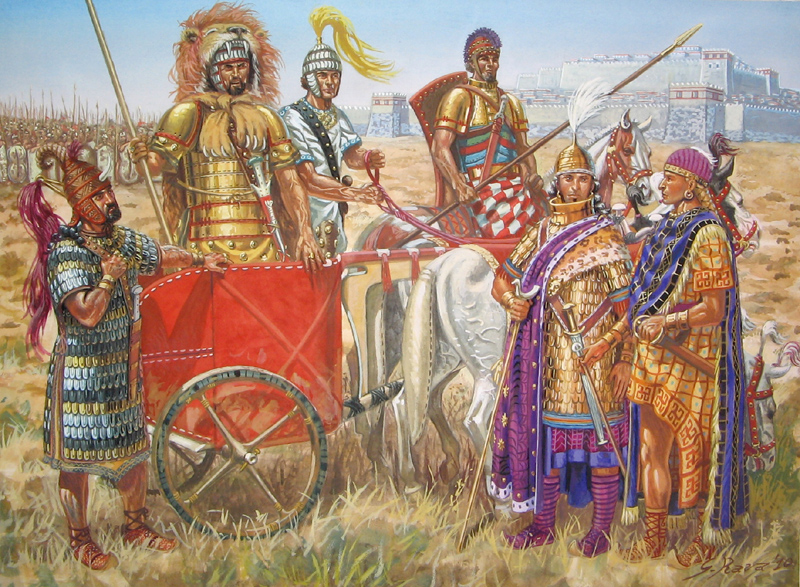
     Heroes such as Aquiles and Herakles used chariots as war platforms and transport vehicles through the battlefield. They were the "tanks" of the Bronze Age, before someone capable of breeding horses big enough to ride had such an idea. The ancient greeks also imagined chariots pulled by gryphons.


Another option would be the wingless gryphons seen at the Knossos Palace.


      There are plate armors, but they're made of bronze (an alloy of copper and tin). Good quality bronze is better than iron and easier to forge and fix. Some bronze alloys could pierce steel. The reason that bronze is expensive and rare was because tin deposits were rare and were far away from copper deposits. In a fantasy world, this could be different. So a Mythical Greece could rightfully loathe iron as a barbarian, inferior metal, while bronze is the true, greek and heroic metal. Bronze cuirasses could be cheaper, and even full plate could be available, like this one.

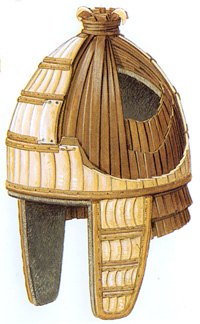
      One can also find armor made of iron, horn, leather, teeth, bone and certain vegetable fibers such as linen. There are as many options as there are barbarians, and only the gods know of many of these exist.


     Greek artificers existed in legends and reality: respectively, Daedalus and Archimedes. Some of the things they might create: gigantic siege towers; drill-like rams; automatons such as the huge Talos or simply animated wheeled tables; the first crossbows, ballistae and catapults; "magic items" which aren't parts of monsters or divine gifts.


      There were ships in many sizes: from biremes used against and by pirates; the classical triremes; going all the way up to the colossal catamaran galleys, moved by four thousand professional rowers. These were real. Fantasy opens up the possibility of, for example, exchanging a hundred human rowers for a couple of giants with huge paddles; or maybe tireless undead which row all day and night.

5. BESTIARY


      Hydras, minotaurs, chimeras etc etc, the monsters of greek mythology are quite explored. But we can find many others waiting for their chance. You may like ones such as:
  • The indian dragons are great serpents with shining eyes and sharp teeth which ambush elephants, ripping off their eyes before coiling around their preys' necks and strangling them. These dragons also have serrated crests from which burns a fire hotter than any torch. They might have wings as well.
  • The neades were such enormous beasts that their roars could crack the very ground. Existing in older times, the greek could perhaps have found fossils which were actually from dinosaurs.
  • The gods had very fast, immortal horses, sons of the four wind gods that sometimes assumed a horse form themselves. But some heroes received these animals as divine gifts: Herakles, Aquiles, Peleus... Ares' horses had fire breaths.
  • Argos Panoptes was a giant with a hundred eyes spread throughout his body. He guarded a nymph turned into a white cow by the goddess Hera.
  • Echidnades was a giant with snakes instead of feet.
  • The drakaina Scythia was a beautiful snake woman which seduced and had sons with Herakles, one of which founded a kingdom of nomad horsemen.
  • Meanwhile, the drakaina Campe was the jailer of the cyclops and hecatoncheires. She had a hair made of serpents, a tail instead of legs, fifty heads of beasts such as lions and boars in her hips; A thousand snakes served as feet like a monstrous centipede, dark wings sprang from her shoulders and a scorpion's tail was on her head.
  • A personal favorite is Typhon, perhaps the deadliest creature in greek mythology. A giant whose head reached the stars, flaming eyes, pointed ears and a filthy beard. It had serpent's tails instead of legs, wings and a hundred snake's heads instead of hand fingers. Even inside in the Pit of Tartarus, it caused storms.


 --/--

Useful links:

The classes of D&D5E adapted to greek fantasy:

Mazes & Minotaurs, a free tabletop game happening on fantasy Greece:

Bestiary:

Kingdoms of Mythical Greece:

Exotic peoples:

A video about the Bronze Age Collapse:

A digital reconstruction of the Palace of Knossos:

Weapons, armor and war in the Greece from 1600 to 1100 BC. Also has information on the Sea Peoples:

About the Sea Peoples:

Bronze Age illustrations:

Armors:

Helmets:

Shields:

Weapons:

Gallery with several appropriate images:

Old ships:

Articles about ancient history:

About the phalanx: