Mostrando postagens com marcador Kosinbia. Mostrar todas as postagens

quarta-feira, 1 de maio de 2019

Harems of the Kosinbian Princes


    Each prince or princess of Kosinbia has a harem. Most people inside them belong to two groups:
  • Individuals with useful skills to the power and administration of a principality. Pyrographers, hunters, tribal leaders, craftsmen, generals, adventurers, pyromancers, etc. The reliable and competent people that any ruler needs to keep his position and/or the safety and stability of his principality, are united through the bonds of matrimony. Many of said bonds are symbolic, having more in common with the oaths of fealty towards a suseran than a relationship based on love.
  • People without anything or anyone. Orphans, cripples, exiled foreigners. The harem is a charity which receives certain people and offers them a home, food, perhaps some kind of education or training, in exchange for service to the prince or princess.

Amazons of Danxome


Do you see the officers decorated with cowry shells and ruby teardrops? They are from the principalities' harems. Most are women because there are currently more princes than princesses. No kosinbian would fight for someone which isn't willing to suffer personal sacrifices. With the harems here, they know that fighting the orcs is more important than going against rival tribes.
-Common instruction to the newcomers at the Sacrificial Bastions.


     The most famous harem's members are the Ahosi, nicknamed "amazons", of the Danxome principality. Being at the extreme north of Kosinbia, it shields the other principalities from the orc migrations. This results in many orphans and widows. The 12º danxomian prince started the tradition of sheltering these women in his harem, training them so they might seek revenge against the orcoids. Candidates become amazons' aprentices. When one of them kills a beast such as a crocodile, lion, hippopotamus, rhino or elephant, and presents the animal to the prince, she becomes part of the harem. At the wedding cerimony, the prince gifts his new wife with: sword, spear, repeater musket, cowry crown, ammunition and either armor, scepter, drum or shield made from the gifted animal. Many Ahosi are virgins and decided to never give birth, although the relation between an amazon and her aprentice(s) is similar to adopting a daughter. The sacred status of the Ahosi is confirmed when they receive blessings from Kahonua, such as: pyroclastic ammunition, hollow lava balls filled with an incandescent liquid which burst in impact; or brigandine and padded armor made from "Kahonua's hair", light and golden fibers of volcanic glass. Many amazons defend the Sacrificial Bastions, others spend months inside the Orcoid Belt and some travel to outside Kosinbia, exterminating orcs all over the continent.

domingo, 28 de abril de 2019

The Origins of Kahonua and Kosinbia

  Sacrificing yourself for the greater good is a virtue. Dying for nothing is a sin. -Amanirena “snake-cutter” Thákame, herald and prophetess of Kahonua. Prayer of Moto Mapokeo Ya (Fire Folklore), Volume Five.


     Why Kahonua and pyromancers are so important on Kosinbia, to the point that the region despises and even vilifies another ways of magic and other gods? It is because the very idea of "Kosinbia" was born through the pyromancers and the volcano goddess.
     
     The whole region was once divided into countless tribes and groups which could share things such as language, race and difficulties, but didn't saw themselves as equals or part of something greater. In fact, the most common trouble for all were the rivalries and fighting with neighboring tribes.

     In this fragmented world, there were two nomad tribes, unique and somewhat accepted by all:


  • Oayas, predecessors of the pyromancers, were as respected and feared as witches, shamans or wizards, bringing troubles and solutions in equal measure. They worshiped the zebra-goddess Nuami, one amongst many other deities exclusive of one tribe or another. Their blend of supernatural martial art and ritual dance was based on zebras fighting, and practiced in the surroundings of volcanoes.

  • Khayas were iron miners and traveling blacksmiths. But because they kept their techniques to themselves, they were mystified by the other tribes, for they knew how to "turn the earth into spears and swords". Their totem was the termite, called Kahomi, for the clay of the termite hives was one of the secrets used to make their furnaces.

     Both groups had no affinity between themselves. Sometimes, a child of the Khayas was sent to the Oayas for their family thought she had a talent for pyromancy and vice versa. This was common among all the tribes which specialized into an art or craft and had youngs which didn't fit for one reason or another, many of which had nothing to do with talent: a benign way to exile the "black sheep" of the community.

     This was the origin of the future prophetess Amanirena Thákame. She was born among the Khayas, but was taken to the Oayas after her parents died in an orc attack which also prevented her relatives from raising her. The girl wasn't killed in the attack because she managed to throw the orc which killed her parents into the furnace they used. It was seen as a sign that her future was tied to fire.

     Being a teenager when she entered the pyromantic tribe, her perspective ended up being a mixture of a blacksmithing childhood with flaming maturity. In some uncertain moment she defined the idea of union among people hostile to each other, but which knew how to speak and love, against a greater evil: the orcs.

     The oral folklores offer several versions for how she united the two tribes in such a way, that the deities themselves fused into a new goddess which mixed fire and earth into the symbol of the volcano, Kahonua. The romantic version is that she managed to do a wedding ritual for a couple of gods which already loved each other from far away; the most mundane version claims she impressed the blacksmith tribe with a fire so hot it could make steel and the pyromantic tribe when she produced "fire from stone", gunpowder, and thus convinced both how the whole could be more than the mere sum of its parts; another version speaks that she married or got involved with important men on both tribes, influencing them through such men; there are also versions more sordid or peaceful, tragic or mystic. Perhaps those sages which try to rebuild the facts by merging the many versions are closer to the truth.


     What is clear is that she started to lead a nomad alliance which used steel and fire as carbon steel blades, martial arts tempered with impressive magic and something completely new, the first firearms. Primitive cannons and handgonnes, cast in iron and bronze, using a mixture that, perhaps, no one would have discovered without the cultural and religious motivation for it: gunpowder. It was hard to counter the argument that union brings strength when the result breaches stone walls, scares men and animals, kill orcs before they touch you and can be used by anyone with minimal training.

     However, Amanirena didn't use firearms. She wielded the spear Wachumatu and the machete Nyoka-Auaye, both made from the iron which was left in the furnace into which she pushed the orc which killed her parents, now shaped as red-hot blades. The prophetess taught that kill someone was a waste, for a life may and must be sacrificed only for the greater good. Punishments were another matter. With her incandescent blades, she cut and cauterized criminals: fingers, ears and other parts which the guilty had to learn to live without. Executions happened only when someone committed so many crimes that there were no parts to cut anymore.

     Thirty years later, she unified the tribes, organized them into principalities, instituted the amani tradition and began the construction of the Sacrificial Bastions. When her duty was fulfilled, came the reward: the goddess of fire and earth turned her prophetess into the first Nyokakuba, mother of all the others. And in this shape Amanirena lives until today in her nest, the sacred volcanic caldera called Kahonuterasi.

sábado, 25 de agosto de 2018

Nyokakuba

Kahonua, warm earth-mother, fire of soul, great rich land, mistress of volcano.
May thy Holy Fetiches protect my tribe and evaporate evil.

-Prayer from the Moto Mapokeo Ya (Fire Lore), Book Twelve.

      The fourteen divine wyrms of Kahonua: magma for blood; scales of granite and dazzling corundum; head armoured in obsidian; metal-melting breath; but its greatest power is to give divine authority to the princes, so they may rule their respective kosinbian principalities. To each one a divine serpent is given, and the two remaining nyokakubas guard the holy city, Kahonuterasi. Following the latter's example, the capitals of each principality were built around a volcanic caldera that serves as a nest to the respective goddess' blessing. When a new prince takes over, the nyokakuba changes its skin. The old scales are then crushed into a dust to cover the new prince, making him capable of surviving any heat and physical contact with the wyrm that marks him in the way a crown marks foreign kings. However, only a small part of this dust is used; the rest stays under the prince's control, which he gives as a reward to the heroes and champions which benefit his principality.

Nyokakuba

Gargantuan celestial, neutral lawful

Armor Class 24 (natural armor)
Hit Points 615 (30d20 + 300)
Speed 50 ft., burrow 30 ft., climb 30 ft.

STR DEX CON INT WIS CHA
30 (+10) 16 (+3)   30 (+10) 12 (+1) 20 (+5) 20 (+5)

Saving Throws Str +17, Dex +10, Con +17, Wis +9, Cha +12
Skills Athletics +15, History +10, Insight +10, Intimidation +10, Perception +16, Persuasion +10, Religion +10, Stealth +8
Damage Resistances bludgeoning, piercing, and slashing from nonmagical attacks
Damage Immunities necrotic, poison, fire
Condition Immunities exhaustion, grappled, paralyzed, petrified, poisoned, prone, restrained, unconscious
Senses tremorsense 180 ft., passive Perception 26
Languages Common, celestial, kosinbian*, ignan, terran.
Challenge 27

  • Heat Aura. A creature that touches the Nyokakuba or hits it with a melee attack while within 20 feet of it takes 16 (3d10) fire damage plus 11 (2d10) radiant damage.
  • Illumination. The Nyokakuba sheds bright light in a 60-foot radius and dim light in an additional 60 feet.
  • Legendary Resistance (3/Day). If the Nyokakuba fails a saving throw, it can choose to succeed instead. 
  • Magic Resistance. The Nyokakuba has advantage on saving throws against spells and other magical effects. 
  • Magic Weapons. The Nyokakuba's weapon attacks are magical. 
  • Innate Spellcasting. The Nyokakuba's innate spellcasting ability is Wisdom (spell save DC 17, +11 to hit with spell attacks). It can innately cast the following spells, requiring no material components:
    At will: detect magic, sacred flame, continual flame, heat metal, cure wounds, shield of faith, fireball.
    5/day: tongues, conjure elemental (fire elemental or earth elemental only), wall of fire, prayer of healing, dispel magic, protection from energy, revivify.
    3/day each: invisibility, plane shift, commune, flame strike, sending, stoneskin, teleportation circle, contact other plane, dream, beacon of hope.
    1/day each: greater restoration, mass cure wounds, true resurrection, earthquake, incendiary cloud, gate.  

ACTIONS

  1. Multiattack. It makes two attacks: one with its bite and one with its tail.
  2. Bite. Melee Weapon Attack: +18 to hit, reach 15 ft., one target. Hit: 21 (2d10 + 10) piercing damage plus 16 (3d10) fire damage plus 11 (2d10) radiant damage. If the target is a creature or a flammable object, it ignites. Until a creature takes an action to douse the fire, the target takes 5 (1d10) fire damage at the start of each of its turns.
  3. Tail. Melee Weapon Attack: +18 to hit, reach 20 ft., one target. Hit: 19 (2d8 + 10) bludgeoning damage plus 16 (3d10) fire damage plus 11 (2d10) radiant damage. If the target is a creature or a flammable object, it ignites. Until a creature takes an action to douse the fire, the target takes 5 (1d10) fire damage at the start of each of its turns.
  4. Pyroclastic burst (Recharge 5-6). Ranged Weapon Attack: +11 to hit, range 200/600 ft., one target. Hit: 19 (2d8 + 10) bludgeoning damage plus 16 (3d10) fire damage plus 11 (2d10) radiant damage in a 30-foot-radius sphere. If the target is a creature or a flammable object, it ignites. Until a creature takes an action to douse the fire, the target takes 5 (1d10) fire damage at the start of each of its turns.
  5. Constrict. Melee Weapon Attack: +18 to hit, reach 10 ft., one creature. Hit: 37 (5d10 +10) bludgeoning damage plus 16 (3d10) fire damage plus 11 (2d10) radiant damage, and the target is grappled (escape DC 20). Until this grapple ends, the creature is restrained, and the Nyokakuba can't constrict another target. If the target is a creature or a flammable object, it ignites. Until a creature takes an action to douse the fire, the target takes 5 (1d10) fire damage at the start of each of its turns. 

LEGENDARY ACTIONS

The Nyokakuba can take 3 legendary actions, choosing from the options below. Only one legendary action option can be used at a time and only at the end of another creature's turn. The Nyokakuba regains spent legendary actions at the start of its turn.
Tail Attack. The Nyokakuba makes a tail attack.
Constrict Attack (costs 2 actions). The Nyokakuba makes a constrict attack.
Volcano (costs 3 Actions). Magma erupts from a point on the ground the Nyokakuba can see within 180 feet of it, creating a 20-foot-high, 10-foot-radius geyser. Each creature in the geyser's area must make a DC 16 Dexterity saving throw, taking 27 (5d10) fire damage on a failed save, or half as much damage on a successful one.


The nest of the nyokakuba in the principality of Danxome.

Where the holy serpent crawls, the soil becomes a flat trail of terracotta which 
serves as a road even if it isn't later paved with ceramics in the shape of scales.


*Swahili of real life.

Kosinbia


https://blogger.googleusercontent.com/img/b/R29vZ2xl/AVvXsEjPu0WWrTadw0e6ln87azmq3CkFBrSCNEEF2BZdnKOMOu-iAmuTB4nbfEZVZJPv46pjQQAbnxZ_Wj6AqjO8D0F8tQP_i-Qyd7N11ZzAol1E07XeOev26gIduemMn7lzQCgiEUigKRFiQg/s1600/kosinbia_by_brunokopte-d90zfk2.jpg

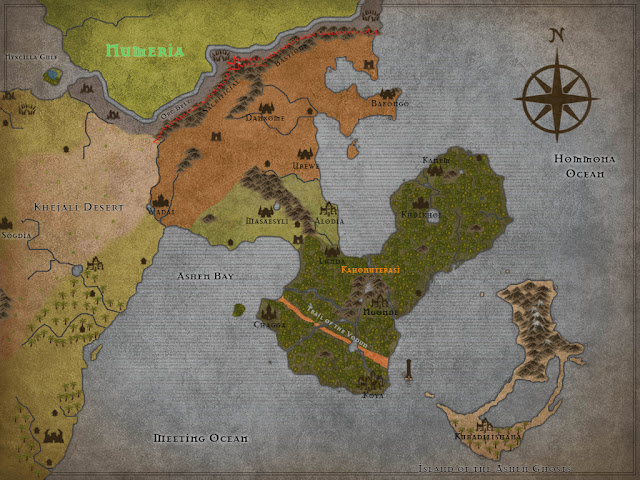
Oriental Sarba's land is divided into twelve principalities, all governed by princes vassals to the kahonuan pyromancers. Each principality contains a capital with the same name. They have differing customs, but some common points remain: hundreds of tribes submit to their respective prince; the local architecture is dominated by adobe and wood, with palaces and fortresses made of stone and terracotta; most tribes have a specialty, from glass blowing to fighting, from growing millet to building ships; it's rare to marry outside one's tribe, usually the result of treaties and alliances; tribes subdivide themselves into clans, each one with its ancestral totem venerated as a protector spirit; "Good" is what contributes for the well-being and happiness of the many, ensuring good relations between people and the community's prosperity. The "Evil" is what threatens social harmony, sociopath behavior and inhuman things; scarification is used to beautify, show affiliations and social status; every district of a capital keeps a great fire day and night, producing a column of colorful and flavored smoke. Kosinbians are proud to say that even "blind and deaf foreigners" never get lost in their cities, one only having to follow the characteristic smell of each district. Finally, Kahonua's pyromancers have the most political, legal and religious power. Every temple or monastery is charged with keeping pieces of oral lore, a valuable secret used only if necessary. Things like Kahonua's Ascension, details over the Dead Gods, techniques of heat and fire manipulation, how to commune with the spirit world. In particular, the measures of balance between sacrifices, related taboos and analysis of corresponding gains and losses are the basis of kosinbian laws. For example, inprinsonment is seen as the prisioner making a sacrifice which benefits the community, but there must be an equilibrium between the privation suffered and the gains of the many.


Danxome - The most militarized nation, due to having a frontier with the Orcoid Belt. Even a hungry peasant won't sell the spear he carries, ready to defend the principalities from orc migrations. It also has the largest and most famous cannon foundries of all Sarba, designing advancements such as composite cannons. A principality famous for its elite troops, the Ahosi amazons.


Wadai - Dominated by savannas and arid terrains. The local culture mixes Kosinbia and Khejal, going as far as worshipping gods other than Kahonua. Having one of the ends of the Ivory Route makes the wadaians natural merchants, reselling foreign goods to the other principalities. Both factors makes oher kosinbians distrustful of the wadaians' honesty and adhesion to customs. On the other hand, they don't quite follow khejali customs, for they hunt elephants, keeping the meat and selling the scrimshawed ivory.


Masaesyli - The best eland riders of all Kosinbia. Every year, thousands of nomads hunt tens of thousands of wildebeests, a time marked by festivals and dangers. It is traditional for the masaesylian princess to lead this great hunt which also serves as martial training for the riders. In this land, one's wealth is measured by the number of elands one has.


Kanem - Charged by the pyromancers of defending kosinbian waters, Bafongo's peoples build ships with powerful bow cannons to pursue pirates. This allows them to not contribute with troops to the Sacrifice Bastions, although there are always volunteers. The surplus of warriors and ships made them establish colonies and outposts as far as the south of Kavaja and even in certain points of Drakazin. The crews of kosinbian galleys are good at making the cannonballs bounce on the water, increasing the range, lethality and sometimes hitting several ships.


Urewe - Has more mines than any other principality, extracting from earth iron, quartz, coal etc. They're also expert smiths, forging ingots and items of carbon steel. It's the only principality which raises termites for eating as well for the hive's clay, which has refractory properties excellent for forges. The other local craft is glass blowing. The combination of the two results in luxury goods, with no equal in the continent: glasses and telescopes.


Chagga - Being near the Ashen Bay makes it so the region is specially rich in spirits, from beneficial intermediaries between mortals and Kahonua, to spirits which are evil fragments of the Dead Gods. This results in a great number of shamans which partially replace the pyromancers in the principality's bureaucracy and divine matters. They also can contact the ancestral totems of kosinbian clans. Even the common people can have relations with one or another spirit and some even acquire powers in the process. All this also makes the chaggians very superstitious, something reasonable in their region but almost unnecessary outside of it. This land also contains a great number of cultists which worship the Dead Gods, trying to revive them with sacrifices and profane rituals.


Koya - The mines here produce a third of the world's gold. The local princess is so rich that she avoids to buy things, not due to being stingy, but because she doesn't want to destabilize the kosinbian economy as her father did. She also borrows money at modest interest rates, financing public and private projects in all Kosinbia and beyond. She calls herself "the richest person in the world", what might well be the truth. Her fortune is such that she affords the existence of the "Knights of the Essence-Flame", a group of warriors which ride hybrids of horse and zebra, wielding spears and swords whose blades are made of fire capable of cutting steel as if it was butter.


Mgonde - It's an open secret that the current mgondian prince is a puppet of the local arcane aristocracy. Not only pyromancers, but wizards and sorcerers of all specializations exist here. One can also find arcane colleges, magical varieties of gunpowder and powerful fetishes. Many mgondian tribes specialize in the making of masks. But such items aren't only decorative: the mask of a pyromancer is a symbol of authority such as the hammer of an imperial judge. Other masks serve for one to become the host of the spirit invoked for testimony during a judgment. Tribal masks can also be equivalent to arcane wands and symbols of pacts with supernatural forces, either good or evil. Take care as to not offend the spirit which lives in your mask or fetish, or it might refuse to borrow its power.


Khoikhoi - The humid jungle prevents this principality's urbanization from growing. Besides the capital, there is a handful of towns and countless fortified villages facing the dangers of the bush. Snakes, diseases, witches, fairies, vampires... For some, "bush" is synonym of "chaos" and "hell". Few trails are safe and most move through the rivers in canoes. Many believe that one or more evil powers strive to keep this state of affairs. Some explore the bush to find out if it is true, finding ruined temples, fey enclaves and millenary necropolises in the process. The heat and humidity makes the local folk dress in little more than kilts of intertwined leaves and prefer weapons of brass or bronze instead of iron.


Alodia - The kosinbian granary. Fields of sorghum, yam, cocoa and baobab orchards go as far as the horizon in some places, irrigated by terracotta aqueducts. Perhaps the most peaceful, populous and urbanized principality. The numerous ceramic roads show a local specialty: many say that pyromantic artisans from here can create ceramic armors, and obsidian blades, which don't break easily.


Lunda - Contrasting with the nearby Khoikhoi, the lundian jungle is almost gentle. Even the fires are intentional and administered by the local druids, which understand how the biomes they guard depend of fire. Many exotic pigments are collected by the locals, making this principality the one with the most diverse and showy colors. The easiness to collect medicinal plants also favors a great number of alchemists and healers. The deep woods hide a great number of elven peoples, from an unknown ethnicity.


Bafongo - A volcanic region highly hostile to life, full of salt flats, wells of liquid sulphur, fissures spewing toxic gas and acid lakes. The pyromancers train here at the same time that benefit the local economy: at the active volcanic calderas, they learn to manipulate the lava in such a way that can extract valuable things such as copper, granite, lead, diamonds and asbestos from incandescent and viscous lakes, ingredients used by the local artisans. The people from here have barbarian customs: they live as hunter-gatherers, walk in hot coals and mark themselves with hot irons. The heat of battle and things such as flaming arrows whip them into a frenzy. Throw themselves against the enemy with throwing clubs and wooden swords inlaid with obsidian, skin glistening from sweat and so wild that they pass out from heatstroke later. Many kosinbians are ashamed from these tribes, for they represent the worst of the pre-unification Kosinbia.


Kahonuterasi - Not a principality, but the kosinbian holy land. Here reside the pyromancer leaders of the Kahonuan cult, inside a mountain which combines five volcanos with varying levels of activity, thermal lakes constrasting with lava pits.The ashen plains are highly fertile: the mountain slopes are rice terraces, producing a surplus reserved to regions suffering from famine. Many say that Kahonua herself lives in the most active volcano, the "Shira". There are many monasteries full of pyromantic monks discussing the minutiae of the kosinbian oral folklore, songs, fables and prayers considered both too valuable to be written as well as to be forgotten. There are many sages, the Miungu 'Midomo, whose divine mission is to be living libraries, keeping and transmitting knowledge said by the prophetess Amanirena herself. So they can better preserve what they know, these men and women go into voluntary comas, being awakened only when needed. These people are guarded very closely against mundane and supernatural threats.


Kubadilishana - Considered a part of Kosinbia, despite being a city in the Island of Ashen Ghosts. A paradise of pirate and corsairs coming from "here, there and thither", as the locals say. This places has everything a pirate needs, ships, weapons, maps, risky and valuable rumors, crews and even reputations (they can spread stories over the world faster than anyone else). There are dozens of languages spoken here, being fashionable to speak things others don't understand, to curse enemies in incomprehensible but offensive ways, and saying things which sound well even if they actually sound as a choking hyena.


  • Amani - Religion, war and peace in harmony
  • Sacrificial Bastions
  • Elands
  • Principal harems
  • Nyokakuba
  • Origins of Kahonua e Kosinbia
  • Wagadu, the wonderful city

sábado, 7 de abril de 2018

Kosinbia


https://blogger.googleusercontent.com/img/b/R29vZ2xl/AVvXsEjPu0WWrTadw0e6ln87azmq3CkFBrSCNEEF2BZdnKOMOu-iAmuTB4nbfEZVZJPv46pjQQAbnxZ_Wj6AqjO8D0F8tQP_i-Qyd7N11ZzAol1E07XeOev26gIduemMn7lzQCgiEUigKRFiQg/s1600/kosinbia_by_brunokopte-d90zfk2.jpg     A terra de Sarba Oriental é dividida em doze principados, todos governados por príncipes vassalos aos piromantes de Kahonua. Cada principado contém uma capital de mesmo nome. Os principados diferem bastante em costumes, mas existem alguns pontos em comum: centenas de tribos se submetem ao seu respectivo príncipe; a arquitetura local é marcada por adobe e madeira, com palácios e fortalezas feitos de pedra e terracota; a maioria das tribos assume uma especialização, desde fabricar vidro a lutar, plantar milhete a construir barcos; casamentos fora da tribo são raros, geralmente resultado de acordos e alianças; tribos se subdividem em clãs, cada um com o seu totem ancestral venerado como um espírito protetor; o “bem” é aquilo que garante o bem-estar e felicidade dos outros, contribuindo para as boas relações entre as pessoas e a boa fortuna da comunidade, cada um fazendo a sua parte em prol do todo; o “mal” é o que ameaça a harmonia social, desde o egoísmo até as coisas inumanas como doenças e monstros; escarificação é usada para embelezar, demonstrar afiliações e status social; cada distrito de uma capital mantém uma grande chama dia e noite, produzindo uma coluna de fumaça colorida e aromatizada. Kosinbianos se orgulham em dizer que mesmo "estrangeiros cegos e surdos" nunca se perdem em suas cidades, bastando seguir o cheiro característico de cada distrito. Finalmente, os piromantes do culto de Kahonua concentram o poder político, legal e religioso. Cada templo ou monastério é encarregado de frações do folclore oral, guardando-o como um segredo valioso e usando-o se necessário. Exemplos são a ascensão de Kahonua, detalhes sobre os deuses mortos, técnicas de manipulação de fogo e calor, como comungar com o mundo dos espíritos. Em especial, as medidas de balanço entre sacrifícios, tabus relacionados e análise das perdas e ganhos correspondentes formam a base das leis kosinbianas. Por exemplo, cárcere é visto como o prisioneiro fazendo um sacrifício em prol da comunidade, mas deve haver um equilíbrio entre a privação sofrida e os ganhos para a maioria.

Danxome - A nação mais militarizada, devido a estar na fronteira com o Cinturão Orcoide. Mesmo um aldeão com fome não vende a lança que carrega, pronto a defender os principados das migrações orcs. Também possui as maiores e mais famosas fundições de canhões em toda Sarba, projetando novidades como canhões compostos. Um principado famoso por sua tropa de elite, as amazonas Ahosi.


Wadai - Dominada por savanas e terrenos áridos. A cultura local é um misto de Kosinbia e Khejal, inclusive adorando outros deuses além de Kahonua. Abrigar uma das pontas da Rota do Marfim faz dos wadaineses comerciantes naturais, revendendo produtos de toda Sarba aos demais principados. Esses dois fatores também fazem com que os demais kosinbianos desconfiem da honestidade e apego às tradições dos wadaineses. Por outro lado, eles não exatamente seguem os costumes khejalis, pois caçam elefantes, ficando com a carne e comercializando o marfim decorado.


Masaesyli - Os melhores "elandeiros" (cavaleiros de elandes) de toda Kosinbia. Todo ano, milhares de elandeiros nômades caçam dezenas de milhares de gnus durante a migração desses últimos, um período marcado por festivais e perigos. É tradição que a princesa masaesyliana lidere essa enorme caçada que também serve como treinamento militar para os elandeiros. Aqui, a riqueza de alguém é medida pelo número de cabeças de elandes que possui.


Kanem - Encarregados pelos piromantes de defender as águas kosinbianas, esse principado constroi embarcações com grandes canhões frontais para perseguir piratas. Isso os torna o único principado que não precisa contribuir com tropas aos Bastiões do Sacrifício, embora sempre hajam voluntários. O excedente de tropas e navios os levou a estabelecer diversas colônias em regiões distantes, como ao sul de Kavaja e até em certos pontos de Drakhazin. As tripulações das galés kosinbianas são proeficientes em fazer as balas dos canhões quicarem na água, aumentando o alcance, letalidade e, às vezes, atingindo diversos navios com um único tiro.


Urewe - Tem mais minas do que qualquer outro principado, extraindo da terra ferro, quartzo, carvão etc. Também são exímios ferreiros, forjando lingotes e itens de aço-carbono. São o único principado que cria cupins para comer e também pela argila do cupinzeiro, com propriedades refratárias excelentes para forjas. O outro artesanato local é a fabricação de vidro. A combinação dos dois resulta em dois produtos de luxo, sem igual no continente: óculos e telescópios.


Chagga - A proximidade com a Baía das Cinzas faz com que a região seja especialmente rica em espíritos, tanto intermediários benéficos entre mortais e Kahonua, quanto espíritos que são fragmentos malignos dos Deuses Mortos. Isso resulta em um grande número de shamãs que em parte substituem os piromantes na burocracia e questões divinas do principado. Eles também conseguem entrar em contato com os totens ancestrais dos clãs kosinbianos. Mesmo pessoas comuns conseguem ter relações com um ou outro espírito e alguns até adquirem poderes no processo. Tudo isso torna os chagganeses muito supersticiosos, algo razoável em sua região mas quase desnecessário fora dela. A região contém um grande número de cultistas que adoram os Deuses Mortos, tentando revivê-los com sacrifícios e rituais profanos.


Koya - As minas daqui produzem um terço do ouro mundial. A princesa local é tão rica que evita fazer compras, não por ser pão-dura, mas por medo de desestabilizar a economia kosinbiana como o seu pai fez. Ela também empresta dinheiro a juros modestos, financiando projetos públicos e privados Kosinbia afora e até além. Ela refere a si mesma como "a pessoa mais rica do mundo", o que pode ser verdade. A sua fortuna é tamanha que banca a existência dos "Cavaleiros da Suma-Flama", um grupo de guerreiros que portam lanças e espadas cujas lâminas são feitas de fogo capaz de cortar aço como manteiga.


Mgonde - É um segredo aberto que o atual príncipe mgondiano é um fantoche da aristocracia arcana local. Não só piromantes, mas magos e feiticeiros de todas as especializações existem aqui. Também pode-se encontrar colégios arcanos, variedades mágicas de pólvora e fetiches poderosos. Várias tribos mgondianas se especializam na confecção de máscaras. Mas esses itens não são apenas decorativos: a máscara de um piromante é um símbolo de autoridade assim como o martelo de um juiz imperial. Outras máscaras servem para ele deixar de ser si mesmo e se tornar o hospedeiro do espírito invocado para testemunho durante um julgamento. Máscaras tribais também podem ser o equivalente a varinhas arcanas e símbolos de pactos com forças sobrenaturais, sejam benéficas ou malignas. Cuidado para não ofender o espírito que habita a sua máscara ou fetiche, ou ele pode se recusar a emprestar o seu poder.


Khoikhoi - A selva contém a urbanização desse principado. Além da capital, existem poucas cidades mas inúmeras aldeias fortificadas contra as ameaças da selva. Cobras, doenças, bruxos, fadas, vampiros... Para alguns habitantes, "selva" é sinônimo de "caos" e "inferno". Poucas trilhas são seguras e a população se desloca pelos rios em canoas. Muitos acreditam que um ou mais poderes malignos se esforcem para manter essa situação. Alguns desbravam a selva para descobrir se isso é verdade, encontrando templos arruinados, enclaves feéricos e necrópoles milenares no processo. O calor e a umidade fazem com que o povo vista pouco mais do que saiotes de folhas entrelaçadas e prefira armas de bronze ou latão em vez de ferro. 


Alodia - O celeiro kosinbiano. Campos de sorgo, inhame, milho, cacau e pomares de baobás se estendem até o horizonte em alguns lugares, mantidos por um sistema de irrigação e aquedutos de terracota. Talvez o principado mais pacífico, populoso e urbanizado. As numerosas estradas de cerâmica mostram uma especialidade local: as bocas alheias dizem que artesãos piromânticos daqui conseguem até criar armaduras de cerâmica, e lâminas de obsidiana, que não se quebram facilmente.


Lunda - Ao contrário da vizinha Khoikhoi, a selva lundiana é quase gentil. Mesmo as queimadas são propositais e administradas pelos druidas locais, que entendem como os biomas que guardam dependem do fogo. Muitos pigmentos exóticos são coletados pela população, tornando esse principado aquele com as cores mais vistosas e variadas. A facilidade de coletar plantas medicinais também favorece um grande número de curandeiros e alquimistas. As matas escondem uma população élfica substancial, de uma etnia desconhecida.


Bafongo - Região altamente vulcânica e hostil à vida, repleta de planícies de sal, poços de enxofre líquido, fissuras cuspindo gás tóxico e lagos ácidos. Os piromantes treinam aqui ao mesmo tempo que beneficiam a economia local: nas caldeiras vulcânicas ativas, aprendem a manipular a lava de tal forma que conseguem extrair coisas valiosas como cobre, granito, chumbo, diamantes e asbesto dos lagos viscosos e incandescentes, ingredientes usados pelos artesãos locais. O povo daqui tem costumes bárbaros: vivem como caçadores e coletores; andam em carvão em brasa e se marcam com ferro quente. O calor da batalha e coisas como flechas incendiárias os deixam enlouquecidos e selvagens. Arremetem-se contra o inimigo com clavas de arremesso e espadas de madeira incrustada com obsidiana, pele brilhando com suor e tão fora de si que desmaiam de exaustão depois. Muitos kosinbianos se envergonham dessas tribos, pois representam o pior da Kosinbia pré-unificação.


Kahonuterasi - Não é um principado, mas a terra santa kosinbiana. Aqui residem os líderes piromantes do culto de Kahonua, dentro de uma montanha que combina cinco vulcões com vários níveis de atividade, lagos termais contrastando com poços de lava. As planícies cinzentas também são extremamente férteis: as encostas do vulcão são terraços de arroz, produzindo um excedente armazenado para ser entregue a regiões passando por dificuldades. As bocas alheias dizem que a própria Kahonua mora no vulcão mais ativo, o "Shira". Sobram monastérios cheios de monges piromânticos discutindo as minúcias do folclore oral kosinbiano, canções, fábulas e preces consideradas tanto valiosas demais para serem escritas quanto para serem esquecidas. Existem muitos sábios, os Miungu 'Midomo, cuja missão divina é serem bibliotecas vivas, armazenando e transmitindo saberes ditos pela própria profetisa Amanirena. Para melhor preservar o que sabem, esses homens e mulheres entram em comas voluntários, sendo acordados apenas em caso de necessidade. Essas pessoas são guardadas com muito afinco contra ameaças mundanas e sobrenaturais.


Magadoxa - Considerada parte de Kosinbia, apesar de ser uma cidade na Ilha dos Fantasmas Cinzentos. Um paraíso de piratas e corsários vindos "daqui, dali e dacolá", como dizem os locais. Aqui têm tudo o que um pirata precisa, sejam navios, armas, mapas, boatos arriscados e valiosos, tripulantes e até reputações (são capazes de espalhar histórias mundo afora como ninguém). Existem dezenas de línguas, ao ponto de que é moda falar coisas que os outros não entendam e xingar oponentes de maneiras incompreensíveis mas ainda de tom ofensivo.

sexta-feira, 9 de fevereiro de 2018

Wagadu, a cidade maravilhosa

https://upload.wikimedia.org/wikipedia/commons/thumb/d/d3/Biella-artigianato_orientale.jpg/640px-Biella-artigianato_orientale.jpg
...metade da cidade é feita de jardins cheios de baobás repletos de flores e frutas. Cada rua tem uma fonte de água, leite, vinho de coco e mel. Ninguém passa fome ou sede. Muitos ancestrais sábios estão lá, contando histórias que divertem e ensinam. Ninguém fica entediado ou ignorante. Não há porque brigar ou temer por sua vida, pois todos têm o que precisam e orcs não existem lá. Nenhuma arma existe, porque nenhuma arma é necessária.
-Crônicas dos Hipopótamos.

     Existe uma crença em uma cidade maravilhosa em Kosinbia, Wagadu. Um lugar que recebe quem tem força no coração, pois é feita desta própria força. Mas ela existe apenas para quem acredita em si mesmo, nos outros e em Wagadu. Ela surgiu apenas quatro vezes na história conhecida de Kosinbia, abrigando certas pessoas que conseguiram alcançá-la em jornadas perigosas. Em cada aparição, teve um nome distinto: Dierra, Agada, Ganna e Silla. Cada vez, o seu portão ficava em um sentido diferente: norte, oeste, leste e então sul. As bocas alheias acham que o próximo surgimento de Wagadu terá portões em todas as direções cardeais.

     Alguns piromantes de Kahonua dizem que a cidade é uma armadilha dos deuses mortos, mas muitos kosinbianos pensam nela como uma recompensa, talvez da própria Kahonua. Um paraíso que recebe apenas os merecedores. Uma cidade que desaparece apenas quando é alvo de fraquezas como vaidade, falsidade, ganância e revolta. Muitos temem e tentam prever qual a próxima fraqueza que fará Wagadu desaparecer antes que possam a alcancem, para que possam eliminar esta mesma fraqueza de si mesmos. Será hedonismo? Ou talvez uma traição? Ou será que desta vez Wagadu será forte o suficiente para ficar, aguentar as fraquezas humanas e se tornar um paraíso na terra, um prêmio de Kahonua a seus fiéis?

quinta-feira, 19 de outubro de 2017

Haréns Principais


    Um harém principal é o harém de um Príncipe ou Princesa de Kosinbia. A maioria de seus ocupantes se encaixa em dois tipos:
  • Indivíduos com habilidades úteis à administração e poder de um principado. Pirógrafos, caçadores, líderes tribais, artsãos, generais, aventureiros, piromantes etc. A coleção de pessoas confiáveis e competentes que qualquer governante precisa para manter a sua posição e/ou a segurança e estabilidade de seu povo, é unida por laços matrimoniais em um principado. Muitos destes laços são simbólicos, tendo mais em comum com o juramento de lealdade de um vassalo a seu suserano do que qualquer relação amorosa.
  • Pessoas sem nada ou ninguém. Orfãos, aleijados, estrangeiros exilados. O harém é uma instituição caridosa que acolhe certas pessoas e lhes oferece um lar, comida, talvez alguma forma de educação ou treino, em troca de serviço ao Príncipe ou Princesa. 

Amazonas de Danxome


Vê os oficiais decorados com búzios e gotas de rubis? São dos haréns principais. A maioria é mulher por haver atualmente mais Príncipes que Princesas. Nenhum kosinbiano lutaria por alguém que não está disposto a sacrifícios pessoais. Com os haréns aqui, eles sabem que é necessário lutar contra os orcs ao invés de tribos rivais.
-Instrução comum aos recém-chegados aos Bastiões do Sacrifício.

     O exemplo mais famoso são as Ahosi, apelidadas de "amazonas", do principado Danxome. Estando no extremo norte de Kosinbia, ele guarda os demais principados das migrações orcs. Isto resulta em muitas viúvas e orfãs. O 12º Princípe danxomês iniciou a tradição de acolher estas mulheres em seu harém, treinando-as para que pudessem se vingar dos orcóides. Candidatas tornam-se aprendizes de amazonas. Quando uma delas abate um fera como um crocodilo, leão, hipopótamo, rinoceronte ou elefante, e apresenta o animal ao príncipe, torna-se parte do harém. Na cerimônia de casamento, o príncipe presenteia a sua nova esposa com um dote consistindo de: espada, lança, mosquete de repetição, coroa de búzios, munição e uma armadura, cetro, tambor ou escudo feito do animal abatido. Muitas são virgens ou decidiram nunca dar à luz, embora a relação entre uma Ahosi e sua(s) aprendiz(es) costume ser como adotá-las como se fossem as suas filhas. O status sagrado destas amazonas é confirmado quando recebem bençãos como: balas piroclásticas, bolas de lava com interior líquido incandescente liberado no impacto; jaquetões e brigantinas feitas de "cabelo de Kahonua", fibras de vidro vulcânico dourado e leve. É afiado e quebradiço a ponto que tocar na fibra faz com que farpas finas penetrem a carne, mas as amazonas são sofrem cortes, apenas quem as enfrenta. Ahosi dedicam as suas vidas a caçar orcs. Muitas defendem os Bastiões do Sacrifício, outras ficam meses dentro do Cinturão Orcóide e algumas partem para fora de Kosinbia, exterminando orcs por todo o continente.

Bastiões do Sacrifício


     Reforçando os penhascos de rocha vulcânica do Planalto Mauna, os Bastiões do Sacrifício são uma linha de defesas superadas apenas pela Muralha Ragnarok e os redutos subterrâneos de Kurskgrad. Cada quilômetro é um ziguezague engenhoso de fossos, terraplanagem, paredes inclinadas e grossas. Milhões de tijolos vermelhos marcados por manchas e listras pretas da pólvora e fogo, como a pele de um predador camuflado.


     Os Bastiões ficam ao norte do Principado de Dankome, mas dependem de contribuições e recrutas de toda Kosinbia. O núcleo desta cooperação é o culto piromântico de Kahonua. Estudiosos imperiais estimam que assim,  metade das migrações mensais orcs são eliminadas aos pés das muralhas, e apenas um quarto chega às fronteiras nortenhas. A extensão total dos Bastiões é de 2.700 quilômetros, e mesmo a guarnição permanente de 100.000 kosinbianos tem dificuldade em patrulhar e manter as defesas frente aos ataques orcs, especialmente se coincidirem com os terremotos frequentes. Tijolos de reposição e guindastes são tão ou mais vitais que os canhões e encanamentos lança-chamas, às vezes trabalhando lado a lado para selar uma brecha antes que orcs penetrem as savanas ao sul dos Bastiões e se espalhem por Kosinbia.